Operator eLearning

Brand New Courses
Coming soon
A series of new courses to help train operators for examination and beyond.
Course Descriptions & Registration
AWWA offers best practice tools, methods, and guidance for water operators. This eLearning series aims to help water utility staff implement these capabilities.
Content considers Water Professionals International (WPI) Need-to-Know Criteria
FREE: Introduction to The Role of Water and Wastewater Operators
This microlearning introduces the vital responsibilities and skills of operators who ensure safe drinking water and effective wastewater treatment. It highlights their roles in system monitoring, equipment maintenance, regulatory compliance, and public health protection. The course also outlines the technical knowledge required, career advancement opportunities, and the environmental impact of their work. Training and certification pathways are discussed, along with the challenges and rewards of the profession. Overall, it positions operators as essential, skilled professionals at the heart of community health and environmental sustainability.
MicroLearning Objectives:
Describe what operators do
Review the kinds of jobs and job duties are available to water operators
Identify and review sites, resources, and where you can do to learn more about water workforce jobs
Experience an AWWA eLearning course for free!
Our Water World: Introduction to Water
Our Water World introduces the essential concepts and practices of water treatment, with a focus on the critical role it plays in safeguarding public health and supporting sustainable communities. Through an exploration of water’s natural journey in the hydrologic cycle and the human interventions necessary to ensure its quality, students will gain a comprehensive understanding of water’s path from source to consumption and beyond.
Module 1: Introduction to Water on Earth
Module 2: Water Consumption in the United States
Module 3: Sustainable Water Management
Learning Objectives:
- Identify where and in what forms water resides on planet Earth
- Describe the water cycle and name the steps in the cycle
- Describe how water is used globally and in the United States
- Describe the process and implications of a virtual water footprint
- Compare freshwater and saltwater ecosystems
- Describe the components that make up an ecosystem
- Apply your understanding to sustainable water management
The Water Cycle for Operators
Water is one of our planet’s most essential resources, shaping natural landscapes, sustaining ecosystems, and supporting human development. This course provides a foundational understanding of water’s movement through the environment and how human activity influences that cycle. It begins by exploring the hydrologic cycle, the continuous movement of water above and below the Earth’s surface and how it drives environmental processes. It then examines the impacts of this cycle on natural systems, such as rivers, aquifers, and ecosystems, as well as its effects on man-made systems like stormwater infrastructure and water supply networks.
Module 1: Hydrology
Module 2: Impacts on Natural Systems and Human Influenced Systems
By the end of the course, you will be able to:
- Identify the main components the water cycle
- Explain the movement of water through the water cycle.
- Describe how urbanization affects runoff and infiltration.
- Describe how human activity can alter natural water systems.
- Define and describe the main components of the water cycle
- Apply your understanding of the water cycle to a role as water or wastewater operators
- Recall historical events that demonstrate the fragility of our ecosystem
- Apply your understanding of the water cycle to resource management
Iron and Manganese Removal in Water Treatment
Iron and manganese are common nuisance metals found in many groundwater sources. While not considered health risks at typical concentrations, they cause aesthetic issues such as staining, discoloration, and taste problems, and can impact treatment processes and distribution systems. This course provides an overview of their occurrence, removal strategies, and operational considerations for maintaining regulatory compliance and public satisfaction.
Module 1: Iron and Manganese and Problems to Recognize
Module 2: Control or Removal of Iron and Manganese
Module 3: Sequestration and Precipitation
By the end of the course, you will be able to:
- Identify the common issues presented by iron and manganese in water supplies
- Recognize EPA guidelines and standards for iron and manganese in drinking water
- Describe the role of the water operator
- Explain key treatment methods used to remove or manage iron and manganese
- Apply your understanding of chemistry to iron and manganese removal
- Compare and contrast the sequestration and precipitation process
- Identify when one process is used over the other
Groundwater and Wells
This course introduces the fundamentals of groundwater and wells for water utility operators. It covers aquifer types, groundwater recharge, and well construction components essential for safe and reliable water supply. Participants learn about groundwater quality, contamination risks, and preventive maintenance practices. The course explains hydraulic concepts such as drawdown, cone of depression, and specific capacity, which are critical for monitoring well performance. Regulatory frameworks, wellhead protection, and emerging issues like PFAS contamination are also discussed. Practical guidance is provided on siting, operation, and abandonment ensures compliance and sustainability.
Module 1: Groundwater, Aquifers, and Water Quality
Module 2: Wells and Well Construction
Module 3: Aquifer Performance
Module 4: The Regulatory Landscape and Maintenance of Wells
By the end of the course, you will be able to:
- Explain the basics of groundwater hydrology and aquifer types
- Describe the percolation process
- Describe confined aquifers verses unconfined aquifers
- Identify sources of contamination in groundwater and surface water
- Identify common well components and their functions
- Recognize the hydraulic characteristics of a well
- Calculate well yield and specific capacity
- Determine potential well siting locations
- Identify the activities for an aquifer evaluation
- Determine the evaluation data for wells and aquifers
- Identify the activities for an aquifer evaluation
- Determine the evaluation data for wells and aquifers
Pretreatment Essentials
Coagulation and Flocculation for Water Operators
Sedimentation and Clarifiers
Disinfection Basics
Advanced Water Treatment
Full Program — All Courses
All courses above.
Certification & Renewals
Preparing for Initial Certification
Continuing Education
Become an Operator
AWWA can help you prepare for initial certification.
Certified operators are a critical part of providing an adequate and safe supply of water. Operators are typically responsible for a variety of tasks centered around operating and maintaining a system or plant. They typically work in a selection of capacities: water treatment, distribution, water collection, or wastewater.
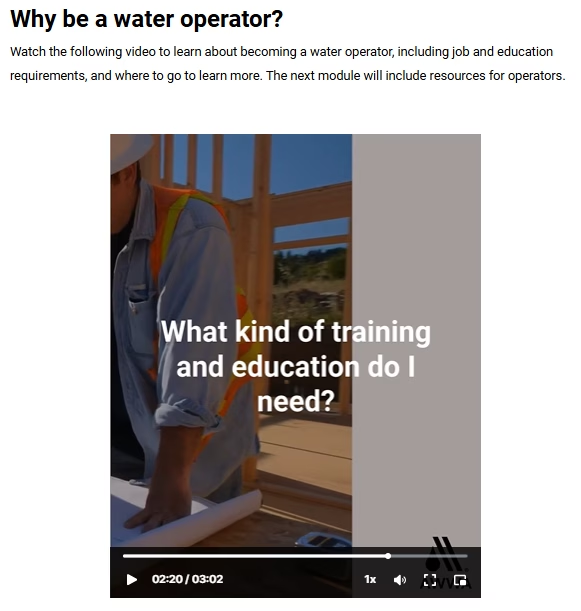
FREE Microlearning: Introduction to The Role of Water and Wastewater Operators
Operator Licence Renewals
Whether you are an engineer collecting PDHs, an operator needing CEUs, or simply require proof of attendance, AWWA eLearning provides Certificates of Completion.
Special Note for operators: AWWA is applying to multiple state agencies for approval of the eLearning courses included on this page.
Explore Your State’s Renewal Requirements
Quick Links

Advertisement