AWWA members advocate for infrastructure funding (and more) in D.C.
April 16, 2026

AWWA Articles
AWWA members advocate for infrastructure funding (and more) in D.C.
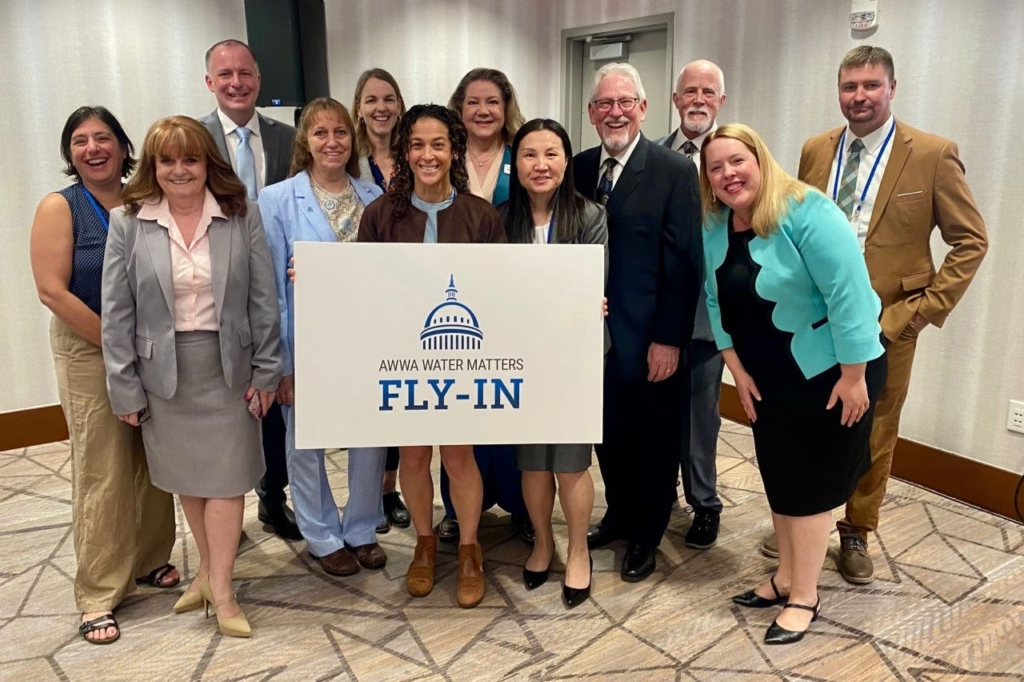
More than 200 members from the American Water Works Association representing all 50 U.S. states met with their congressional representatives this week during the annual Water Matters Fly-In.
At the top of their list of concerns were infrastructure needs — namely, maintaining funding for the Drinking Water and Clean Water State Revolving Funds (SRF) and the Water Infrastructure Finance and Innovation Act (WIFIA), both of which provide low-cost loans so utilities can take on critical utility upgrades without overburdening ratepayers.
“In Allentown, Pennsylvania, we’re going to spend almost $300 million on lead service line replacements over the next 10 years, and we need our legislators to know how critical it is that they support funding for those programs,” said Liesel Gross, CEO at Lehigh County Authority.
President Donald Trump’s budget request for fiscal year 2027, released this month, proposes deep cuts to both SRFs and WIFIA. At the same time, a recently released analysis from AWWA shows infrastructure costs rising to such a degree that ratepayers’ bills will double by 2050.
“Based on our new report, water systems will need to spend $2.1 to $2.4 trillion over the next 25 years to replace infrastructure, invest in resilience, and comply with existing regulations,” said Nate Norris, director of legislative affairs at AWWA, referencing “Beyond the Replacement Era: Balancing Compounding Infrastructure Needs with Household Affordability.”
The report shows that the water sector has entered a new cost era, while investment gaps grow. AWWA members on Capitol Hill urged Congress to reauthorize and fully fund the Drinking Water and Clean Water State Revolving Funds (at $3.25 billion each) and the WIFIA program (at $80 million).
“It’s important for water utilities to be here sharing their local perspectives, because that’s what ultimately moves a member of Congress from ‘no’ or neutral to ‘yes’ in supporting these priorities,” Norris said.
AWWA delegates, organized through their sections, also advocated for a number of other priorities during their in-person meetings with congressional staff:
- The Water Systems PFAS Liability Act, which is a bipartisan proposal that holds PFAS manufacturers and polluters responsible for cleanup costs, rather than local water systems.
- Legislation that strengthens the security and resilience of water systems.
- LIHWAP (Low Income Household Water Assistance Program) Establishment Act, which helps families with low incomes pay their bills and in turn, ensures utilities can fund critical operations.
“Sending an email is so impersonal, but when you meet with people in person, they understand exactly what our needs are. That’s why it’s so important to be here sharing our perspective,” said Sophia Oberton, production trainer at WSSC Water in Maryland.
In addition to two days of meetings with Congressional representatives, AWWA members participated in a regulatory briefing and a debrief luncheon where they shared experiences from their Hill visits.
The Water Matters Fly-In took place concurrent with the broader Water Week, which convenes water professionals and public officials every year in Washington, D.C., for policy briefings and Hill meetings.
Advertisement