Keep Funds Flowing: SRF supports critical wastewater upgrades in Traverse City
July 7, 2026

AWWA Articles
Keep Funds Flowing: SRF supports critical wastewater upgrades in Traverse City
At a wastewater treatment plant in Traverse City, Michigan, some equipment has become so outdated that replacement parts are no longer available from the manufacturer.
“It is so archaic,” said Art Krueger, director of municipal utilities for Traverse City. “If spare parts aren’t available, we have to rely on a local welding shop to fix them.”
The plant’s downstream components were upgraded in the early 2000s, but the upstream components — or headworks, some of which originated as far back as the 1930s — are still in need of an update.
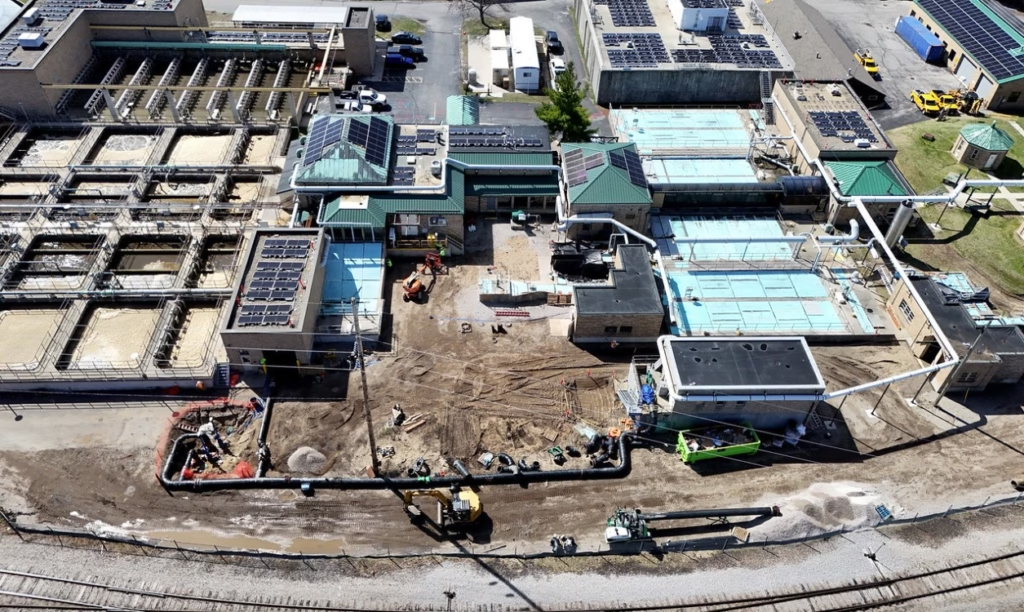
“We knew we had old infrastructure that needed to be addressed,” Krueger said. “It had been in our capital improvement plan for years, but the large-scale upgrade project was all pending funding.”
Now, a $41 million loan from a State Revolving Fund (SRF) is helping the city fix that — and more — without over-burdening ratepayers.
The comprehensive, multi-year project includes:
- Modernizing screening systems that remove large debris from incoming wastewater.
- Upgrading grit removal to keep sand and other abrasive materials from damaging pumps, equipment, and pipes.
- Replacing eight old rectangular primary settling tanks with two more efficient circular clarifiers.
- Rehabilitating a major pump system midway through the treatment process.
- Replacing the old ultraviolet disinfection system at the end of the treatment process.
The project also addresses regulatory requirements tied to the plant’s UV disinfection system, which suffered an electrical outage after a major storm caused excessive flooding. The new system will help ensure long-term compliance and reliability.
“We were really excited to get the Clean Water State Revolving Fund loan money to move the project forward,” Krueger said. “And we save a lot of interest, which helps minimize the impact to the ratepayers on their sewer bills.”
Programs like SRFs provide low-cost financing for essential water infrastructure projects and are supported through federal and state investment. The American Water Works Association is sharing stories of impact to illustrate their importance. By reducing borrowing costs and offering flexible financing structures, SRFs and other financing programs enable communities to modernize aging systems, meet regulatory requirements, and protect public health without placing the full burden on ratepayers.
Another advantage of the SRF program, Krueger added, is the ability to draw funds as the project progresses, rather than receiving the money (and thus, all of the interest) in one, upfront sum — which is typical of municipal bonds.
“It’s a huge advantage financially,” he said. “You’re not paying interest on the full amount right away — just on what you’ve drawn.” The city considered municipal bonds but saw “it would have had a greater impact on ratepayers.”
Traverse City is a regional wastewater utility, serving six surrounding townships in addition to city residents — an area of roughly 50,000 people. Lower borrowing costs help keep rates more affordable across the entire service region, Krueger said.
City leaders expect the updates to be online by fall 2028.
Has your utility received an SRF or WIFIA loan for an infrastructure project? If AWWA can feature your project in its advocacy efforts, please fill out this form.
Advertisement