Wildfire lessons strengthen source water protection for Colorado community
September 18, 2026

AWWA Articles
Wildfire lessons strengthen source water protection for Colorado community
After major wildfires tested its drinking water sources, the City of Loveland, Colorado, turned those lessons into a forward-looking source water protection program — work recognized by the 2026 AWWA Exemplary Source Water Protection Award.
The water system services about 85,000 people and draws from the Big Thompson River and the Colorado-Big Thompson Project, including water stored in Green Ridge Glade Reservoir. Multiple sources allow the utility to diversify supplies as conditions change.
“If your source water is good, it’s much easier to turn it into safe and clean and good-tasting drinking water,” said Andy Fayram, the city’s source water program coordinator. “We have a lot of options when it comes to getting the best water we can.”
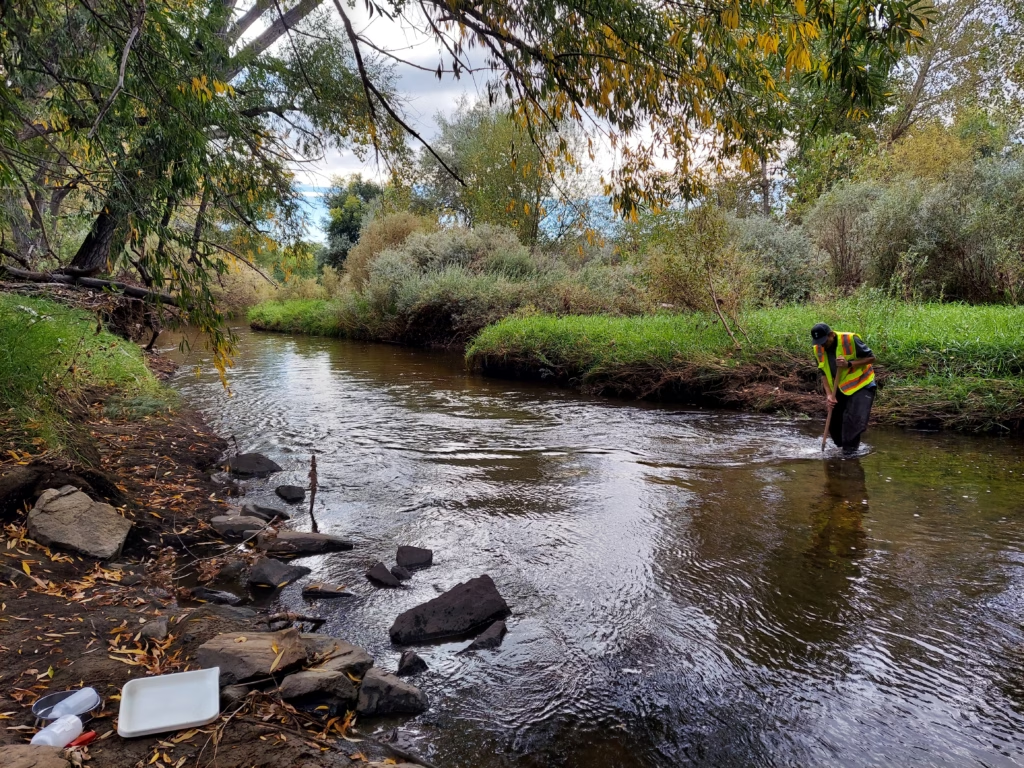
Wildfires have become one of the utility’s biggest source water concerns. The 2020 Cameron Peak Fire, the largest in Colorado history, impacted the Big Thompson watershed and showed how post-fire runoff can change water quality.
“Runoff increased turbidity, elevated manganese became a concern, and ash created additional treatment challenges,” Fayram said.
The experience led Loveland to expand its use of real-time monitoring into smaller creeks. Instead of seeing water quality change only after it reaches the main river, staff now get early warnings that runoff may be on the way.
“It’s expanded where we’re looking and has given us additional lead time to when we might have to change things,” Fayram said.
That preparation was put to work after the 2024 Alexander Mountain Fire burned just upstream of Loveland’s treatment plant. The city installed monitoring equipment on nearby Cedar Creek to alert staff when runoff began flowing toward the Big Thompson River.
“We knew … it would be helpful to put in a real-time monitoring station right there, which we did,” Fayram said. “So, we can get ahead of those [events] to the extent possible.”
Protecting the watershed also depends on partnerships beyond city boundaries. Loveland supports forest management projects with such organizations as the Big Thompson Watershed Coalition and Larimer Conservation District to help reduce wildfire severity.
“Those partnerships matter when conditions change quickly,” Fayram said.
Underlying the utility’s source water protection success is a long-term monitoring program that combines decades of U.S. Geological Survey data, city sampling, and real-time sensors. The data help staff identify risks, guide treatment decisions, and evaluate whether investments are working.
“That information is invaluable,” Fayram said. “Characterizing the issues, knowing what issues to address and which ones you don’t need to worry about is critical.”
For Fayram, the value of protecting source water benefits more than just drinking water.
“You’re protecting just about everything,” he said, including fisheries, recreation and property values. “Nobody’s a loser. Everybody wins.”
AWWA invites utilities and communities to recognize Source Water Protection Week Sept. 27-Oct. 3 by sharing where their drinking water comes from and how they help protect it. Download campaign materials on AWWA’s Source Water Protection Week webpage.
Advertisement