Customer Service Training Program

Customer Service Training Program
Participant & Facilitator Guidebooks
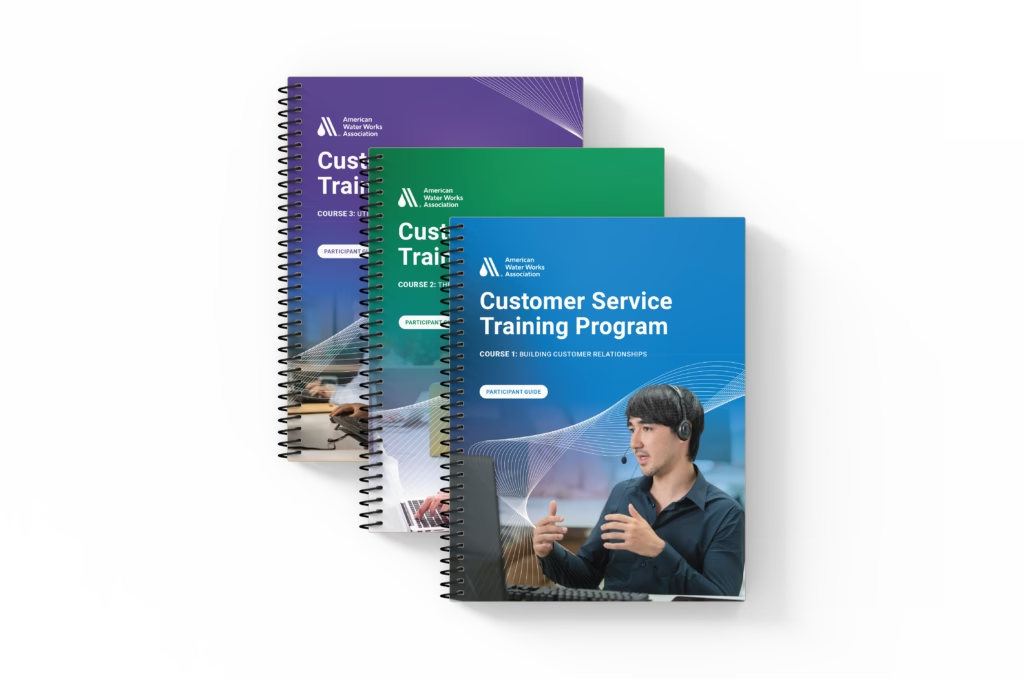
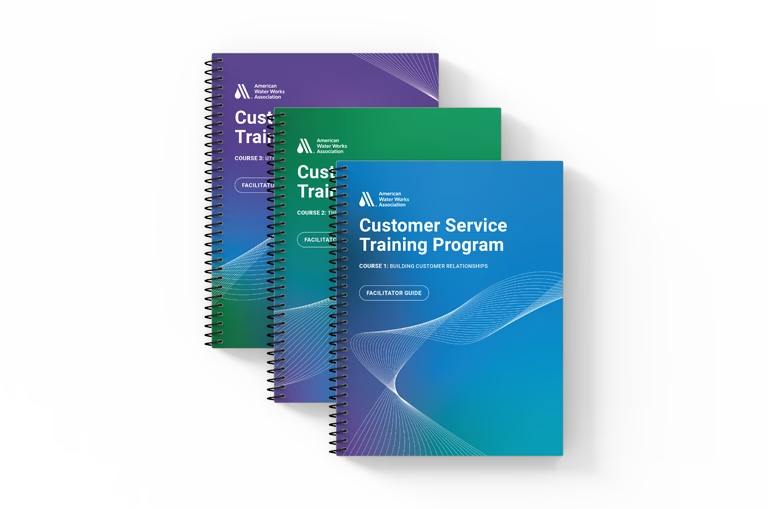
The AWWA Customer Service Training Program (CSTP) provides both facilitator guidebooks and corresponding student guidebooks. Using these books, your organization can administer on-site, face-to-face training for any number of employees. You will determine where and when to conduct the training, using our professional curriculum. By assigning a facilitator from within your organization, you will reduce training travel costs for your employees and improve your employees’ productivity and level of customer service expertise for the industry.
This training is intended to be delivered face-to-face, with a trainer provided by your own organization. We recommend you select an individual with professional training, instructional, or teaching experience.
Program Information
- Schedule the training when it is convenient for your staff, at your own location
- Hire your own trainer (or utilize a current employee of your organization)
- Target audience is customer service representatives
- Three courses – see updated table of contents below
- Designed to span three days, with flexibility to adjust as needed
- New for 2026: Participant workbooks are sold in bundles of five
- Facilitator guide is sold separately, on an individual basis
- AWWA Certificates of Completion template included
Program Course Descriptions
We are happy to announce AWWA’s new Customer Service Training Program. 2026 changes include:
- New look and feel
- New and updated chapters
- New updates to content and delivery
What’s new?
We are happy to announce that the new Customer Service Training is fundamentally changing from previous editions. These changes include:
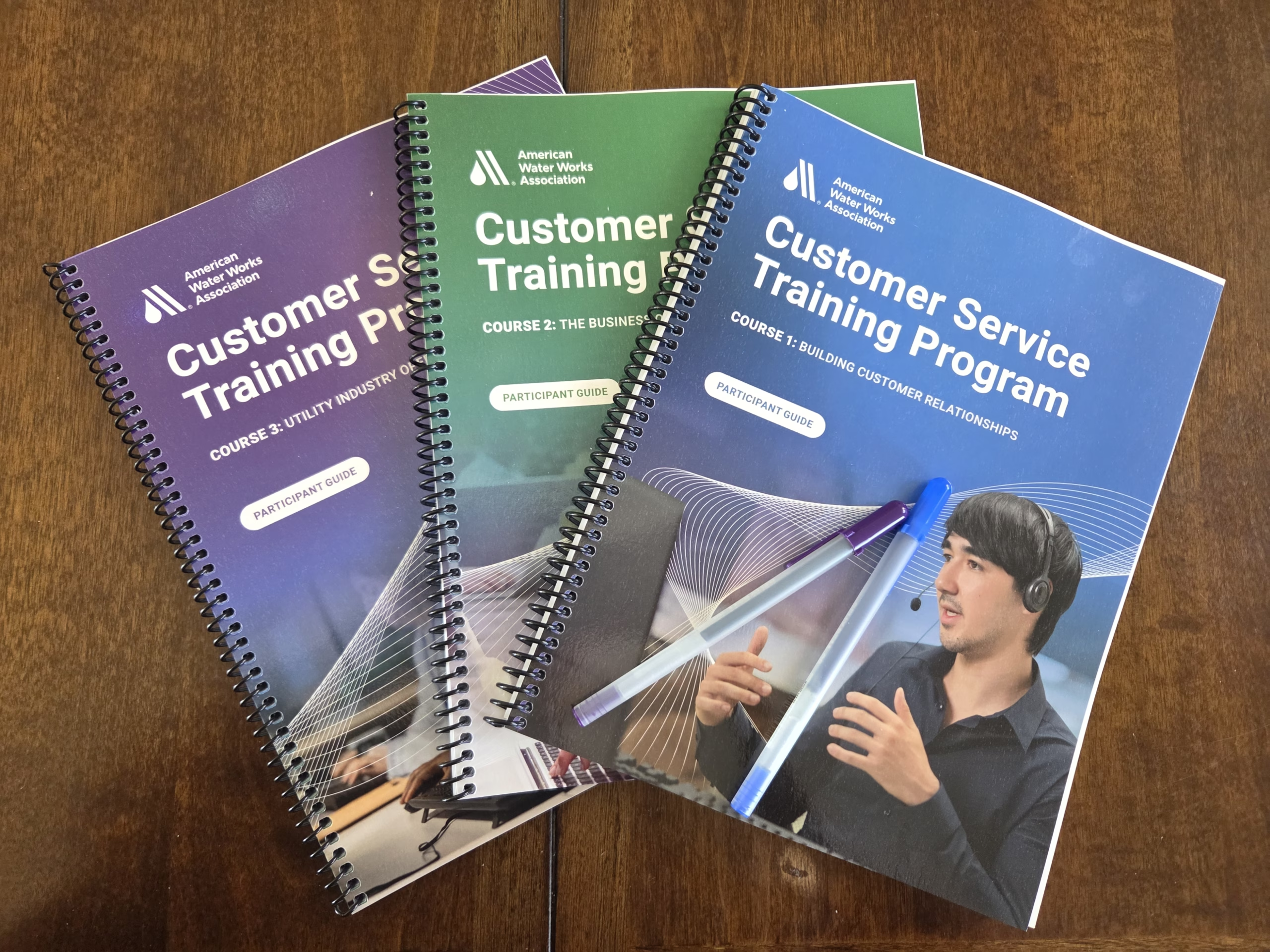
- New look and feel: the books have adopted a modern look and feel, with updated pictures, descriptions, and a new title to match!
- New and updated chapters: All chapters and content have been reviewed and tested in partnership with a water utility and its customer service department. Extensive changes have been made throughout the books, but we highlight changes to our chapters on teamwork, dealing with difficult customers, and technology. A new chapter has been added on diversity in the workplace.
- New updates to content and delivery: New activities, discussions of technology, and process updates have all been updated to support the learning styles of modern learners. Trainers are now supported by trainer tips, written by those who have previously delivered this content. These trainer tips support best practices for teaching this content.
Course 1: Building Customer Relationships
Course 1 Overview
This course builds core customer service skills through five chapters focused on customer relationships. Participants learn effective communication techniques, identify their personal communication styles, and strengthen listening abilities while exploring potential barriers. The program emphasizes maintaining a positive, professional attitude and provides strategies for engaging with difficult customers. It concludes with key concepts to support respectful, productive workplace interactions. Trainees will leave Course 1 with a foundation of skills necessary to provide excellent customer service to both external and internal utility customers.
TABLE OF CONTENTS & OBJECTIVES
Chapter 1: Communication Skills
- Identify the characteristics of excellent customer service
- Identify internal and external customers and the importance of good relationship building
- Describe the main characteristics of effective communication
- Understand the communication process and problems or perceived barriers that can contribute to miscommunications and/or misinterpretation
- Identify your personal communication style
Chapter 2: Listening Skills
- Apply good listening skills and recognize the importance they play in communication
- Utilize and implement different levels of listening
- Identify and practice personal level of listening skills
- Demonstrate an understanding of the barriers to effective listening and apply them at work
Chapter 3: Professional Attitude
- Define professionalism and describe the benefits for customer service representatives
- Utilize the seven keys that promote an optimistic and positive mental attitude
- Demonstrate and apply the power of a smile
- Practice the steps to staying energized and positive
Chapter 4: Working with Challenging Customers
- Apply good listening skills and recognize the importance they play in communication
- Utilize and implement different levels of listening
- Identify and practice personal level of listening skills
- Demonstrate an understanding of the barriers to effective listening and apply them at work
Chapter 5: Diversity, Equity, and Inclusion
- Understand the meaning of the terms diversity, inclusion, globalization, multiculturalism, and prejudice
- Describe the four stages of understanding/learning
- Identify the four key principles of diversity
- Apply the 10 tips for a respectful workplace
Course 2: The Business of Customer Service
Course 2 Overview
The second course concentrates on the need for teamwork to improve customer service. There is an emphasis on the problem-solving and decision-making skills required for evaluating and effectively resolving customer service complaints, both real and perceived. Also included are explanations of the customer service cycle, terms and definitions, and processes common to all customer service organizations. Course 2 concludes with an overview of utility processes and technologies, emphasizing how each supports the customer service cycle and overall service delivery.
TABLE OF CONTENTS & OBJECTIVES
Chapter 1: Teamwork
- Understand the characteristics of a great customer service representative and apply them to everyday tasks
- Recognize the importance of working together as a team to improve customer service
- Identify and apply the traits of a good team member for effective performance
Chapter 2: Personality Types
- Recognize the importance and benefits of knowing your personality type
- Understand different personality test types and models
- Compare the traits of personality style with that of other types to improve interpersonal relationships
- Compare the traits of birth order and use that knowledge to improve interpersonal relationships
Chapter 3: Customer Service in Action
- Utilize the knowledge of channels of communications for better customer interactions
- Employ good telephone etiquette when assisting customers on the phone
- Analyze role playing and the elements of good communication skills
- Understand personal operating style
Chapter 4: People, Processes, and Technology
- Understand the driving force of technology in today’s customer service environment
- Recognize the importance of processes and their need in an effective utility
- Identify utility/customer service technologies, their definitions, and their uses
- Restate and explain the customer service cycle, the processes, and the scope of employees involved
- Participate in “It’s All About Water”
Course 3: Utility Industry Operations
COURSE 3 OVERVIEW
The Utility Industry Operators course is designed to emphasize the trainees’ role in the community of water sector professionals providing a safe and adequate water supply. Participants will learn the fundamentals and basic terminology for managing sources, treatment, and distribution, as well as an understanding of applicable water utility rules, regulations, and policies. This final course also includes an emphasis on communicating the value of water, as well as some of the major issues and initiatives facing all water utilities, such as the need for water conservation, recycling and reuse, water cycle, and climate.
TABLE OF CONTENTS & OBJECTIVES
Chapter 1: Understanding the Basics of Water Science
- Understand and explain the water cycle
- Identify the common steps of a communications plan
- Be able to express to customers and others the importance of water quality and why it is necessary to be good stewards of the water we have
- Explain how climate change is affecting our water supplies and the water cycle
Chapter 2: Understanding the Rules & Regulations
- Understand and summarize the main points of the Safe Drinking Water Act and how it affects water utilities and customers
- Comprehend the rules pertaining to the Consumer Confidence Report and why it is important to customers and consumers
- Appreciate and articulate the importance of the Clean Water Act and its influence on water quality
Chapter 3: The Fundamentals of Water Systems
- Understand the fundamental components of water treatment, water quality, and water distribution from a customer service representative viewpoint
- Apply terms and definitions of water utility operations into daily customer service duties
Chapter 4: The Value of Water
- Understand the affordability of water and the need to adequately price costs for sustainable systems
- Articulate water conservation measures to customers, consumers, and the general public
- Be familiar with the need for protecting watersheds and the tools for managing a watershed
- Understand the benefits of recycling and reuse of water
- Incorporate into discussions with customers the steps and tips to conserve water
Advertisement
Pricing, Terms, & FAQs
Pricing
- Member Rate: $700 per set (a set serves five participants)
- Non-Member Rate: $1,020 per set (a set serves five participants)
- Member Rate: $250 per set (a set serves one facilitator)
- Non-Member Rate $410 (a set serves one facilitator)
- All guide books are purchased by the Training Provider with the sole intent of facilitating a training for water/wastewater industry individuals.
- Each trainer must purchase his/her own set of Facilitator Guides from AWWA.
- Each trainee must be provided with their own set of Participant Guides from AWWA.
- Training Provider agrees not to copy or reproduce any portion of the Guides.
- Books will not be shipped to Training Provider until full payment is received. Once books are shipped no refunds will be made.
- Training Provider agrees to not resell, transfer or re-assign training to others, even without profit.
Terms of Use
Terms:
- All guide books are purchased by the Training Provider with the sole intent of facilitating a training for water/wastewater industry individuals.
- Each trainer must purchase his/her own set of Facilitator Guides from AWWA.
- Each trainee must be provided with their own set of Participant Guides from AWWA.
- Training Provider agrees not to copy or reproduce any portion of the Guides.
- Books will not be shipped to Training Provider until full payment is received. Once books are shipped no refunds will be made.
- Training Provider agrees to not resell, transfer or re-assign training to others, even without profit.
Frequently Asked Questions
Can the training be delivered virtually, via Zoom, Teams, or similar?
It is possible, yes. However, keep in the mind that the training was developed with the intention of face-to-face delivery. For Zoom, Teams, or similar you will likely need to create some PowerPoint slides and you will be responsible for dispersing the physical books to each student.
Is it a three day training?
That is the most common delivery, yes, to deliver one course per day over a series of three days. However, you can personalize this as needed, for example into six half-days instead.
Am I required to purchase the full 3-course program?
Yes, the participant guidebooks will arrive shrink-wrapped in a 3-course bundle. It is not possible to purchase only one course.
Who should we utilize as a Trainer?
Whenever possible, AWWA recommends you select an individual with professional training, instructional, or teaching experience. Many organizations use existing employees as the trainer. If your organization does not employ a training professional, you can instead rely on a customer service manager, a human resources employee, or any combination of roles. You can also hire a trainer of your own choosing.
Is a PowerPoint slide deck and/or any videos included?
No, the product is only books. There is a book for the facilitator/trainer and a book for each participant/student.
Is there a self-paced eLearning version available?
No, there is not a self-paced option. The intent of this program is to be delivered live to a group.
I already own the pre-2026 version, do I really need to order new facilitator guides?
Yes, the new release in February 2026 has been updated significantly and you should purchase a new set of facilitator guides.
Who can I contact with additional questions?
We’re happy to help! Please email us at EducationServices@awwa.org.
Related Resources
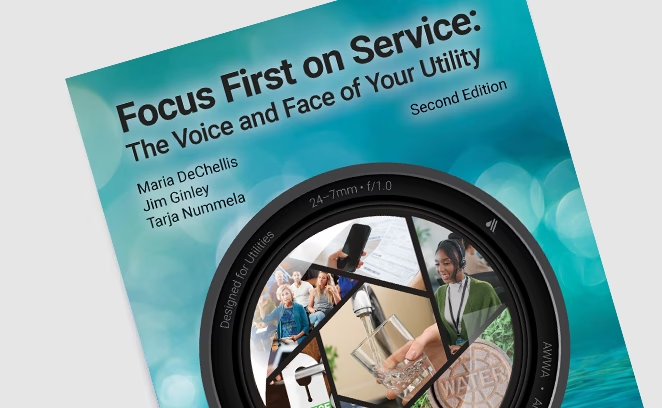
Focus First on Service: The Voice and Face of Your Utility Second Edition
An in-service training workbook for water utility customer service representatives.
Get the Book
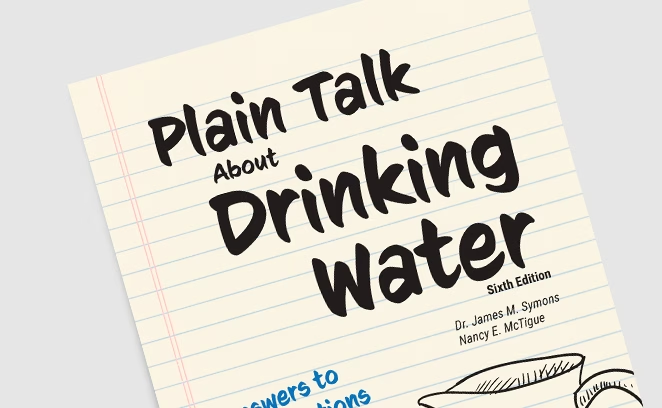
Plain Talk About Drinking Water, Sixth Edition
The first edition of this book was published more than 30 years ago. The goal of that book was to provide explanations for some of the questions that surround drinking water. Where does my tap water come from? How is it treated? Why does ice float? And to explain these things and more, in simple but factual language—using “plain talk.”
Read More
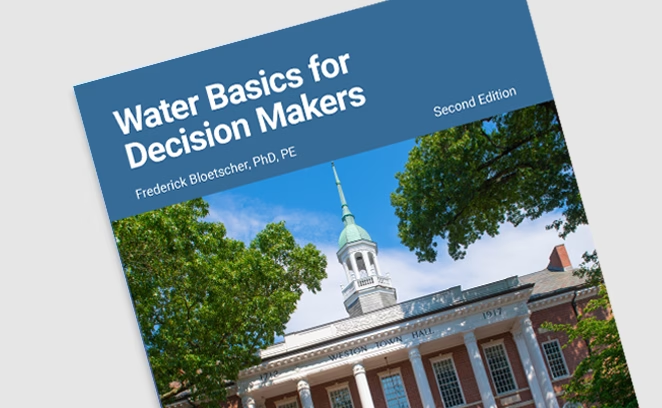
Water Basics for Decision Makers: Local Officials’ Guide to Water & Wastewater Systems, Second Edition
Water and wastewater utilities are the backbone of public health, economic development, and environmental protection. As expectations rise and challenges evolve—from regulatory shifts to infrastructure aging and workforce transitions—utility leaders must be equipped to navigate complexity with clarity and purpose. This revised edition of Water Basics for Decision Makers empowers public officials, managers, and operators with foundational knowledge and forward-looking insights to deliver safe, sustainable, and equitable service in a rapidly changing world.
Read More
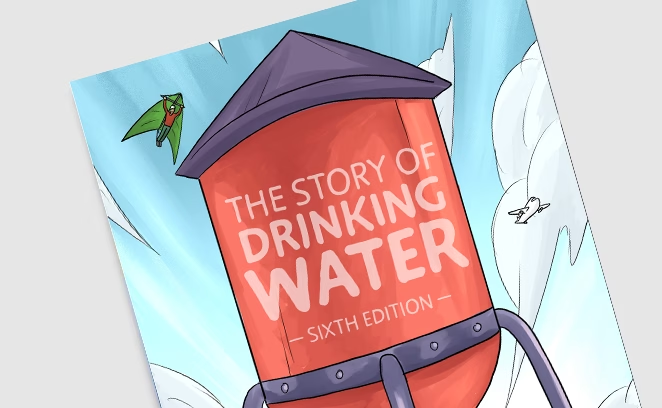
The Story of Drinking Water, Sixth Edition
Kids in grades 4–6 learn about water in this fun, colorful booklet that tells the fascinating story of water and water treatment. An ideal handout for plant tours, school visits, and Drinking Water Week.
Read More
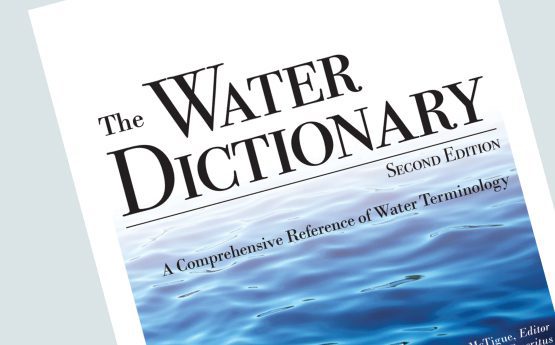
The Water Dictionary Handbook
Developed specifically for water and wastewater professionals, this unique dictionary has more than 15,000 definitions for water-related words, phrases, and acronyms.
Read More
Advertisement