Beyond The Replacement Era
AWWA’s new infrastructure report investigates balancing compounding infrastructure needs with household affordability.

Beyond The Replacement Era
Infrastructure, Resilience, & Other Costs Are Pushing the Limits of Water Affordability
The U.S.’s drinking water systems have entered a new cost era. Communities are no longer facing just an asset‑replacement challenge. Communities are confronting a compounding set of cost drivers including aging infrastructure, regulatory compliance, climate and resilience investments, cybersecurity risks, rising operations and maintenance costs, and treating more complex water sources.
Over the next 25 years (2026–2050), total drinking water infrastructure needs are projected at $2.1–$2.4 trillion (2025 dollars), far exceeding earlier estimates that focused primarily on replacing buried pipes. These pressures represent a structural shift in the cost of providing safe, reliable drinking water, not a temporary spike.
If communities rely exclusively on revenue from water bills to close the funding gap, average annual household drinking water bills would rise 126% by 2050, without considering inflation.
Get the Report
Please fill out the form to access the full report.

A Persistent and Growing Annual Funding Gap
Today, drinking water utilities invest approximately $33.6 billion per year in capital improvements. Meeting projected infrastructure needs would require an average annual investment of about $90.2 billion, leaving an annual funding gap of roughly $56.6 billion, a 168% increase over current spending levels.
Local communities already fund the vast majority of drinking water infrastructure. Federal contributions account for only about 3.9% of total public spending on water utilities, far below the federal share provided to other major infrastructure sectors.
Closing the Gap
Drinking water utility revenues and consumer fees currently provide the primary source of funding for infrastructure investment, placing the burden of capital improvements largely on local ratepayers.
Federal financing programs can help reduce this burden by lowering borrowing costs and spreading repayment over longer periods. Core programs such as the State Revolving Loan Funds (SRF) and the Water Infrastructure Finance and Innovation Act (WIFIA) provide low‑cost, flexible financing that helps utilities advance critical projects while moderating rate increases for households.
Infrastructure Investment and Jobs Act
The Infrastructure Investment and Jobs Act (IIJA) delivered a historic infusion of funding for drinking water infrastructure beginning in 2021. While this investment has been critically important, it is temporary and set to expire after FY2026.
With total annual capital and operations costs projected to exceed $200 billion by 2050, temporary funding alone cannot stabilize the sector. Long‑term, sustained investment through core federal programs remains essential to addressing infrastructure needs while protecting household affordability.
Water Utilities Receive Less Federal Aid than Any Other Major Class of Infrastructure
Despite water utilities counting as the secondlargest infrastructure sector in the United States by expenditures, they receive the lowest level of federal support. Water utility infrastructure accounts for just 3.9% of total public spending.
State and local funding for water utilities overwhelmingly outweighs federal investment, leaving communities and ratepayers responsible for the vast majority of infrastructure costs.
Affordability Impacts
The projected increase in water service costs significantly expands the number of households facing water affordability challenges.
$ 2 +
trillion total drinking water infrastructure investment needed.
$ 56.6
billion annual gap between current annual funding and projected needs.
$ 200.3
billion annual spending needs through 2050.
126 %
average household water bill increase without inflation.
30.4
million households would spend more than 2.5% of incomes on drinking water if funding gap is addressed entirely through rate increases.
Cost Drivers
Drinking water utilities are no longer facing just an asset‑replacement challenge; they are confronting a compounding set of cost drivers that include regulatory compliance, climate resilience, cybersecurity, and treating more complex sources.
Compliance
New regulations surrounding PFAS and lead service line replacement are requiring utilities to spend more on top of existing regulations.
- PFAS treatment often requires new, expensive equipment and staff to manage it with a compliance deadline in 2029
- The cost of replacing all lead service lines in the United States could easily exceed $100 billion
Water Sources
Water supply, climate, and quality issues will increase costs for many utilities as they upgrade treatment or invest in new sources.
Many communities may seek alternative sources of drinking water from:
- Desalination
- Potable reuse systems
- Reverse Osmosis
- Source Water Diversification/Local Resource Development
Resilience
Investments in resilience are not only good for the utility, but they are also good for the community.
- Pre-emptive investment in system hardening and capacity expansion is crucial for maintaining drinking water service during weather events such as fires, floods, and droughts.
- Cybersecurity is increasingly critical for drinking water utilities and national security. Implementing reliable cybersecurity measures requires sufficient staffing and significant responses.
Read stories about how federal funding programs are helping local communities support infrastructure needs. Learn more about out Keep Funds Flowing campaign.
Importance of Water Infrastructure Funding
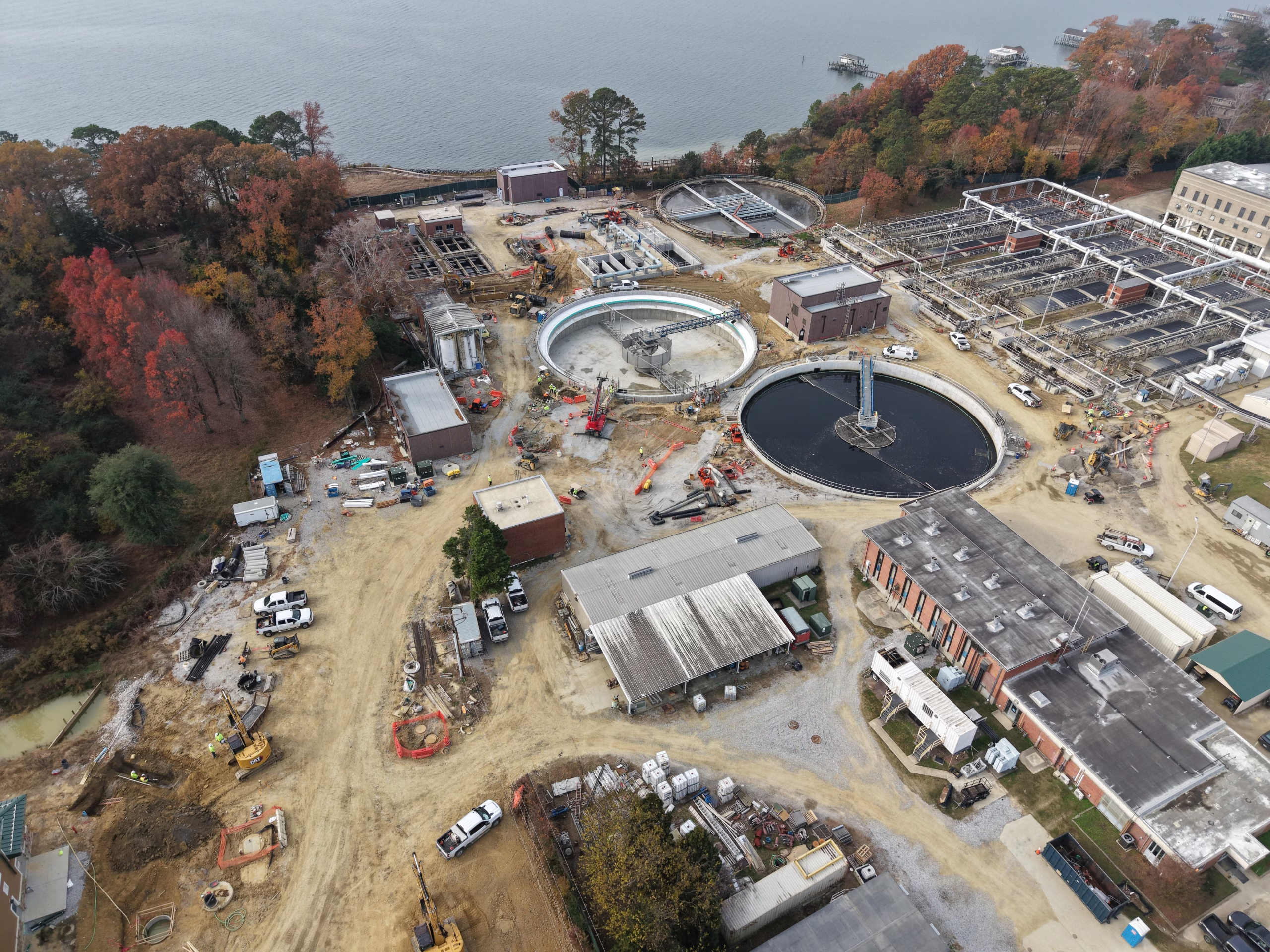
Keep Funds Flowing: Virginia region replenishes underground aquifer
In 2018, HRSD opened a research center that takes some of the highly treated wastewater through additional treatment to bring it to drinking water standards. Today, a million gallons of that water is returned every day to an underground aquifer. In the future, two more facilities — one slated to open in 2026 and another in 2029 — will return up to 50 million gallons per day.
Read More

Replacing a century-old reservoir, thanks to SRF funding
When a community’s water infrastructure is more than a century old, the stakes for renewal are high. In Canton, Ohio, the city’s main storage reservoir — constructed around 1920 — has served generations but in recent years finally showed signs of wear. Thanks to the Drinking Water State Revolving Fund (DWSRF), Canton is now on the cusp of a major upgrade that will secure safe, reliable water for its 100,000 residents for decades to come.
Read More
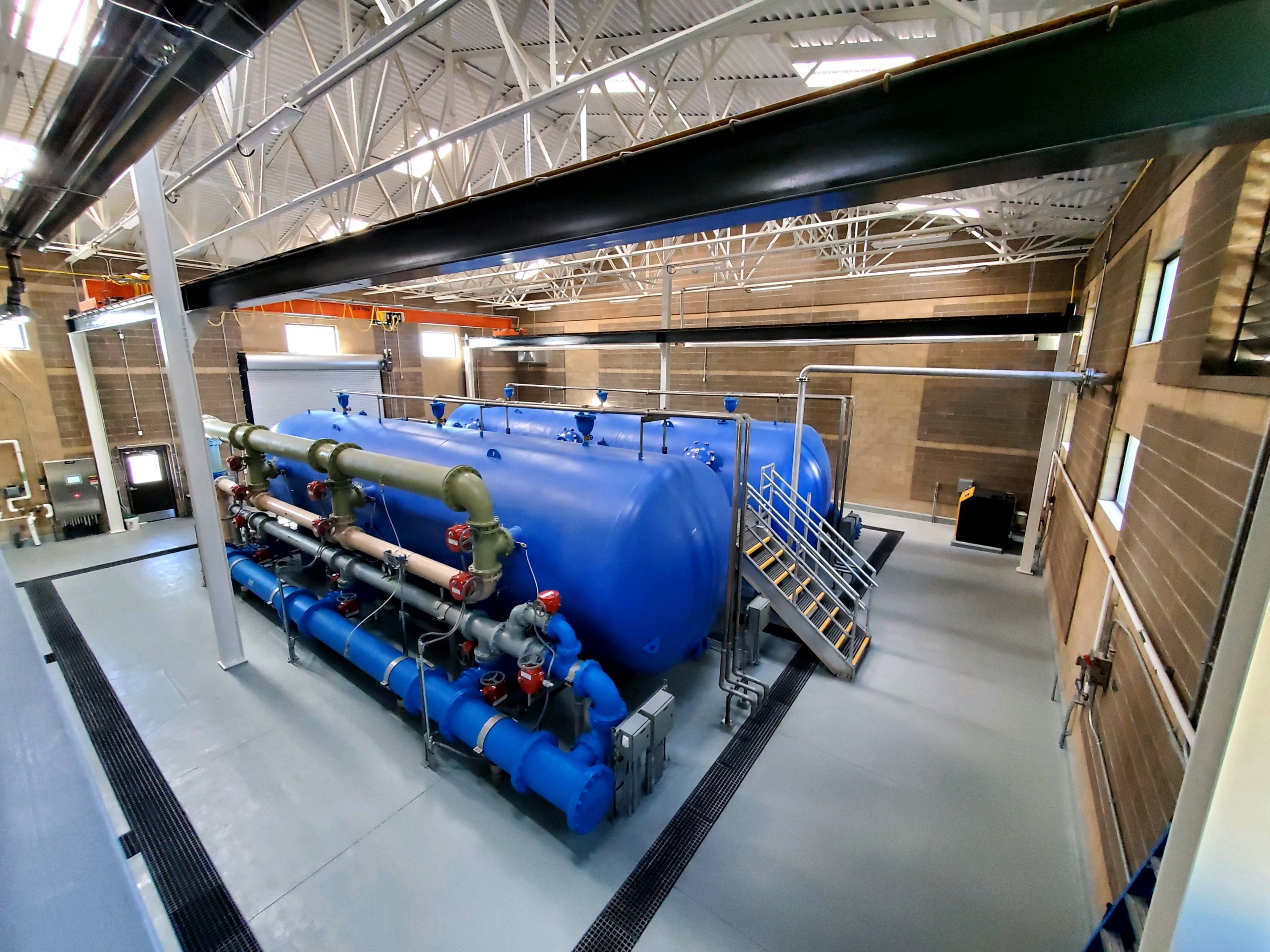
Keep Funds Flowing: SRF loans deliver big savings and clearer water for Utah residents
As drought conditions persisted and the district’s reliance on groundwater increased, so did the complaints about water clarity. When it became clear they would need to install an oxidation and filtration system, it was a local firm that clued them into the federal funding available to support projects like these.
Read More
“To ensure that safe, reliable drinking water remains accessible without driving millions of households into economic hardship, it is imperative that federal investment in the water sector evolves from temporary measures into a more significant, sustained long-term commitment that supports the sector’s growing financial reality.”