Washington utility turns water into clean energy for a school
February 19, 2026

AWWA Articles
Washington utility turns water into clean energy for a school
Skagit Public Utility District in northwest Washington has been generating electricity from one of its reservoir sites since 2020. When leaders explored adding a second micro-hydropower system, they discovered that state law allows only one net metering project (wherein an entity receives credit for excess electricity sent to the grid) per utility. That meant any new system would need to deliver power somewhere other than the electrical grid.
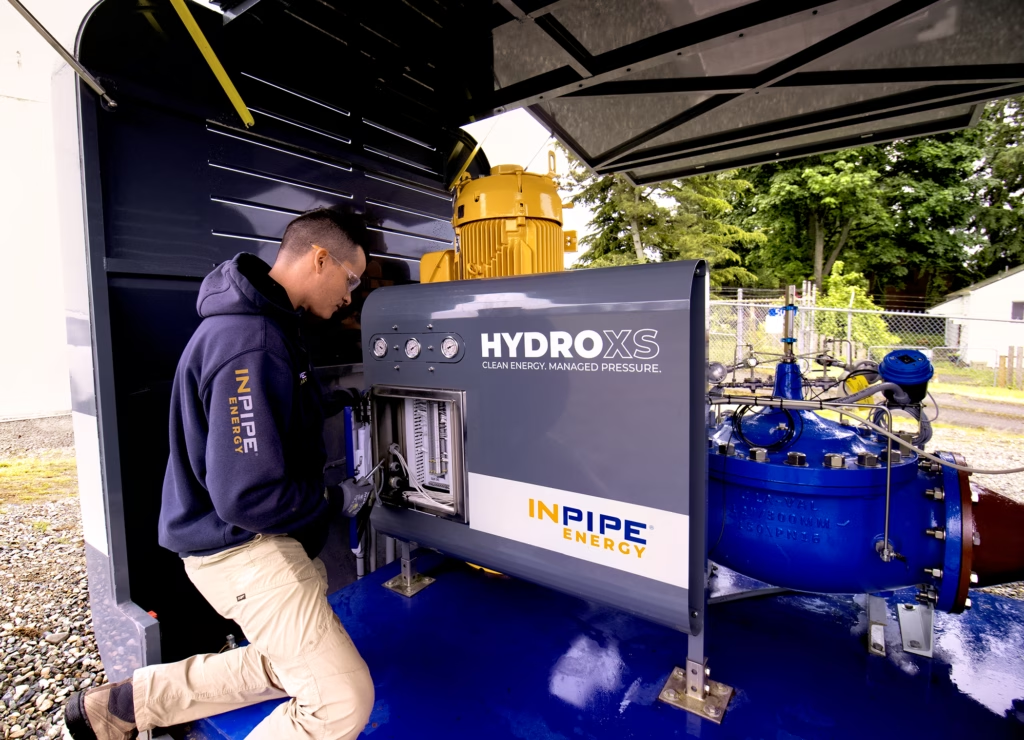
Their solution? Mount Vernon High School, located next door to one of their reservoir sites.
“The option was to do nothing and continue using the pressure-reducing valve as we have for 50 years,” said George Sidhu, general manager at Skagit Public Utility District. “Or we could install an InPipe HydroXS unit and do something good for the community and the school district.”
Skagit partnered with InPipe Energy to install the HydroXS system, which converts excess water pressure into electricity. Instead of wasting energy through a traditional pressure-reducing valve, the system routes water through a turbine-generator that both produces power and maintains required pressure levels. The system generates about 300,000 kilowatt-hours per year (the equivalent of powering 25 to 30 homes), supporting Mount Vernon High’s electric vehicle charging stations and offsetting its energy costs.
“I’m incredibly proud of this project because it shows how shared water infrastructure can do more than deliver water; it can also generate power where it’s needed most,” said Gregg Semler, CEO and founder of InPipe Energy.
This project reflects the circular water economy emphasized in the American Water Works Association’s Water 2050 initiative, demonstrating how water systems can also advance climate and energy goals. Over its 30-year lifespan, the project at Mount Vernon High will prevent an estimated 9.3 million pounds of carbon emissions.

“It’s clean, it’s reliable, it’s sustainable, which is good for the environment and it’s good for our community,” said Kevin Tate, community relations manager at Skagit Public Utility District. The project was also named one of WaterWorld Magazine’s Top 2025 Projects.
For this project, Skagit retrofitted an existing site, which cost $1 million. A combination of state clean energy grants, utility transition funding, and federal incentives covered the entire amount.
Skagit’s first micro-hydropower system, completed in 2020 for $400,000, came at a lower cost because the utility planned ahead — reserving space during construction of a reservoir pump station. That system generates about 120,000 kilowatt‑hours annually and cuts monthly power costs by about $1,000.
“If you’ve looked at this before, you may have convinced yourself that it doesn’t pencil out, but you should look at it again,” Sidhu said. “Smaller projects are increasingly viable today.”
Advertisement