Murder, mystery, and municipal infrastructure
July 24, 2026

AWWA Articles
Murder, mystery, and municipal infrastructure
In Oxford County, Ontario, Canada, a fictional tale of a murder at a wastewater plant is helping a utility rethink how it engages with the public.
The idea grew from a familiar communications challenge. “All our communication around wastewater is usually around capital projects, and that’s maybe not the best time to start explaining what a wastewater treatment plant is or how it works,” said Mackenzie Schultz, manager of water and wastewater technical services for Oxford County, which has nine wastewater plants.
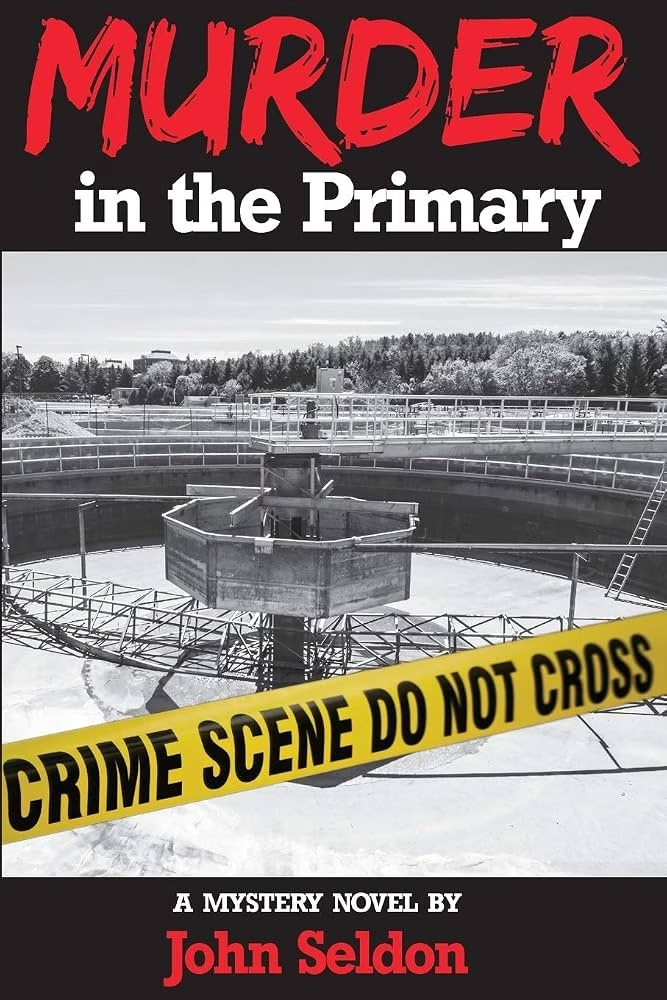
She had heard John Seldon, a retired superintendent with 50 years in wastewater, present at a conference about the power of storytelling to engage the public when he also shared his book — “Murder in the Primary” — which is set in a wastewater plant.
“I was so excited about this presentation that I came back to work after the conference and I told my manager, ‘We have to bring John in!’” Schultz said. “Murder in the Primary” tells the story of a wastewater superintendent drawn into an investigation after a dead body is discovered in a treatment basin.
What better way to entice the public into wastewater treatment processes than through a murder mystery? And so an event at the library was set.
As it turned out, Seldon is no stranger to Oxford County. A local, he drew inspiration from the county’s Tillsonburg Wastewater Treatment Plant to set the scene of his novel. (The cover of his second novel, “Murder in the Aeration,” features a photo of the Tillsonburg plant.) While the novel is set at a fictitious plant, the local geography throughout the story is real. That connection helped the story resonate locally, Schultz said.
“When I reached out to our library, they were double excited because this is a great piece with a local connection,” she said.
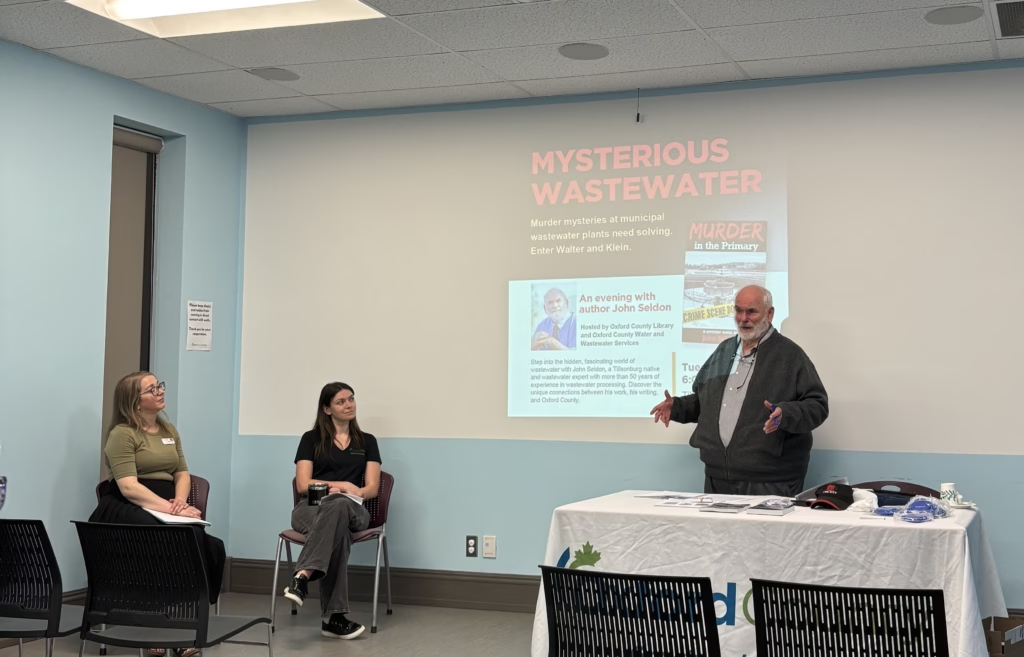
The event took place last month, and the intrigue of the crime novel ended up creating an accessible entry point into the complex world of wastewater treatment. As Seldon read excerpts and answered questions, wastewater processes unfolded within the narrative. “It was a great way to give people visuals of the plant and an understanding of how it works,” Schultz said.
Rather than diagrams or technical presentations, the audience encountered treatment stages as part of a plot — which brought to life otherwise opaque concepts.
The collaboration with the library is also a reflection of a broader strategy for Oxford County: seeking out new partnerships to expand how and where utility messages are shared. “My goal this year was to find a partnership somewhere in the county that we haven’t worked with previously,” she said. “You wouldn’t think that wastewater and the library go together, but … the library is perfect because it is all about education and learning.”
The idea is already evolving. A follow-up children’s program will take place this summer, featuring “Ripple’s Magical Wastewater Treatment Plant,” a book written by a Nikki Ingram, a graduate of AWWA’s Transformative Water Leadership Academy. (Schultz and Ingram met in the same TWLA cohort; they graduated last year.)
And with Seldon on track to publish a third murder mystery in his series this fall, it’s quite possible more events will come, Schultz said.
Advertisement