Keep Funds Flowing: SRF modernizes aging infrastructure in Indiana town
July 2, 2026

AWWA Articles
Keep Funds Flowing: SRF modernizes aging infrastructure in Indiana town
In Goshen, Indiana, federal funding to replace aging drinking water infrastructure became the catalyst for updating all service lines — drinking, storm, and sewer — in a neighborhood sorely in need.
A few years ago, utility crews identified approximately 2,500 lead goosenecks — or, short sections of pipe that connect service lines to water mains — still in use across the city’s drinking water system.
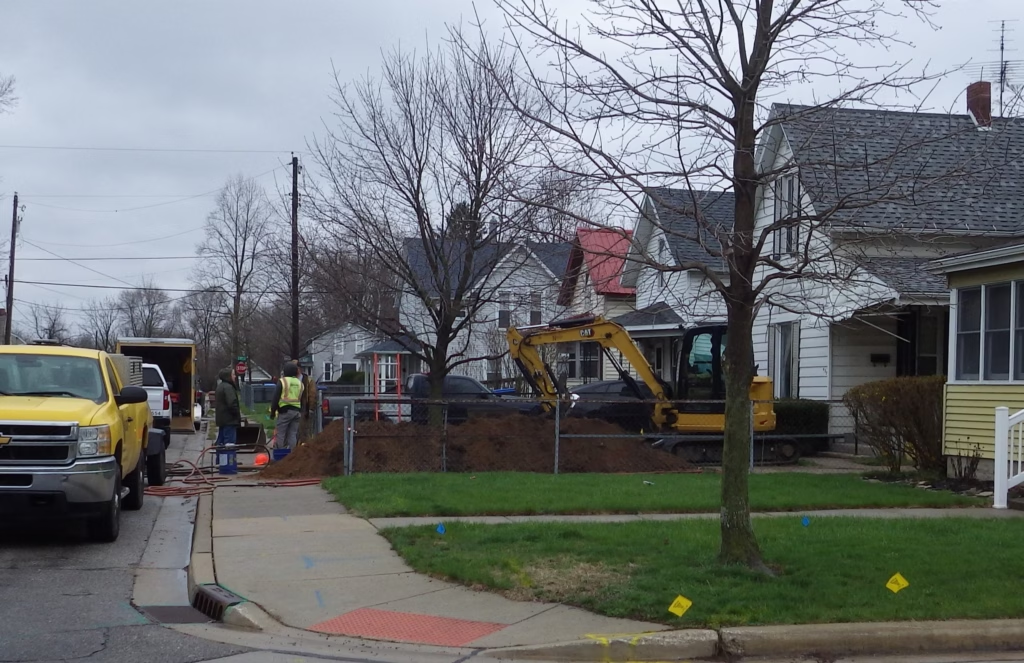
“We’re replacing any part of the service line that was or is downstream of a lead gooseneck,” said Jamey Bontrager-Singer, utilities city engineer for Goshen. In the city’s Northside neighborhood, where the city is prioritizing infrastructure upgrades, the water mains date back to the 1930s.
Because crews are opening up the streets, they are also taking the opportunity to install storm drains, update sewer lines, repave roadways, and improve walkability with new sidewalks. The city of Goshen is funding the sewer, storm, street, and sidewalk work; and that was made possible, in part, by the Drinking Water State Revolving Fund (SRF) which is covering the work of replacing the water mains.
“The SRF really allowed us to do all of the work we’ve been needing to do and to do it without raising rates,” Bontrager-Singer said. “It made it financially possible for us to do all of it … and it’s a tremendous help to some of these very old systems.”
The total cost of the Northside upgrades is $10.5 million; and Goshen received $8 million in SRF funding for the service line project, including a $2.5 million grant, a $2.5 million 0% interest loan, and a $3.1 million low-interest loan. The city funded the remaining amount.
Programs like SRF provide low-cost financing for critical water infrastructure projects and are backed by federal and state investment. By lowering borrowing costs or providing grant funding in targeted areas, they allow utilities to address aging systems, improve water quality, and plan for the future — without placing the full burden on local ratepayers.
Federal funding for SRF and other programs like it is currently up for debate in the U.S. Congress. The American Water Works Association is elevating stories of impact to illustrate the importance of sustained support.
Goshen’s SRF funding supports the replacement of 460 service lines — or about one-fifth of the city’s water infrastructure with lead goosenecks. Work is already underway and is expected to continue through 2027.
“A full-service line is between $10,000 and $12,000 to replace,” Bontrager-Singer said. “We’re doing the entire thing at no cost to the owners.”
And while that work continues, Goshen leaders are looking ahead to even larger needs. Because of a growing population, an emerging need to treat PFAS, and source water vulnerability, the city is planning to replace an existing treatment plant and add a well field estimated to cost $78 million.
Without affordable financing, a project of that scale could significantly impact homeowners.
“We expect this will mean marked increases in user rates,” Bontrager-Singer said, “if SRF funding diminishes or we don’t have any other outside funding.”
The city received some SRF support for design of the project, and Bontrager-Singer says they are hoping for continued support as the project progresses. “We know we have to do it,” he said.
Has your utility received an SRF or WIFIA loan for an infrastructure project? If AWWA can feature your project in its advocacy efforts, please fill out this form.
Advertisement