In Tucson, ‘One Water’ is a community practice
May 15, 2026

AWWA Articles
In Tucson, ‘One Water’ is a community practice
For decades, the city of Tucson, Arizona, pumped more water than nature could replenish, drawing aquifer levels down so severely that the Santa Cruz River ran dry. By the 1960s, land subsidence and long-term water insecurity were visible consequences of that overuse — and clear signs that the community in the Sonoran Desert would need to consider more sustainable approaches.
“We were a textbook groundwater depletion community,” said John Kmiec, director of Tucson Water. “For most of the 20th century, we were not sustainable.”
That forced Tucson to think differently about water — not as a single supply to be extracted, but as a portfolio to be reused and protected. Long before “One Water” became a known phrase or practice, the city began pursuing reuse solutions: retiring agricultural land to secure groundwater rights, investing in recycled water, and forecasting water supply decades into the future. One Water approaches like these are a key tenet of AWWA’s Water 2050 initiative, which envisions a resilient future for water where everyone is collectively responsible for its management and preservation.
Tucson Water now receives an allotment of Colorado River water and uses the farmland purchased in the 1970s to flood man-made basins that allow the water to naturally filter back into the aquifer system. In the 1980s, it started using recycled water to satisfy non-potable demands in parks, golf courses, and school grounds. And conservation efforts have evolved from a short-term solution to a permanent partnership with the community. “Together, these supplies position Tucson for long-term reliability, as long as we continue to use water thoughtfully and responsibly,” said Kmiec, who is also president of the WateReuse Association.
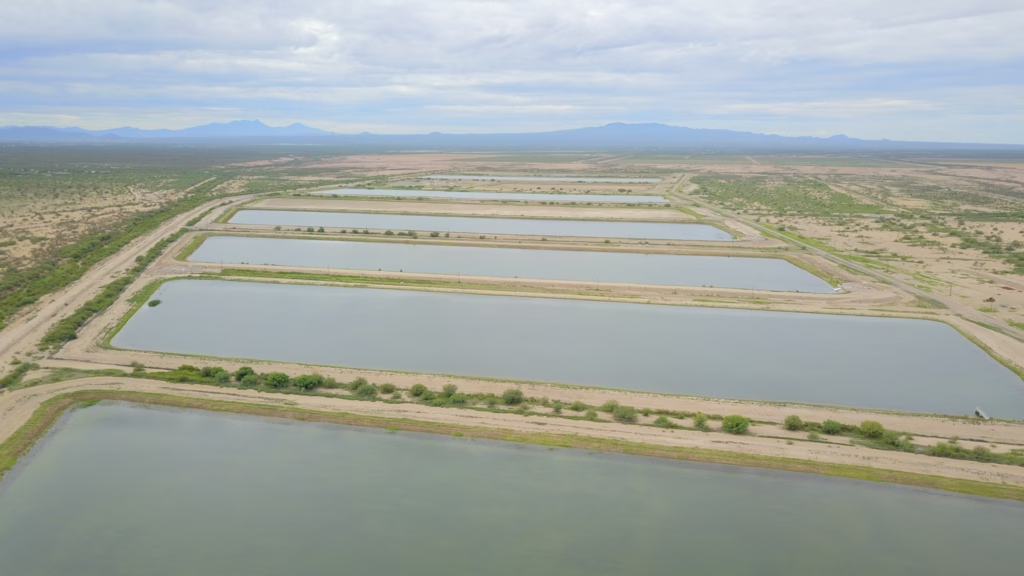
Tucson Water has earned an Assured Water Supply Designation from the state, which means it meets stringent standards under the Arizona Groundwater Management Act and demonstrates legal ownership of water supplies that support growth and development for 100 years.
“We’ve significantly reduced our reliance on groundwater by using our Colorado River allocation, expanding recycled water for non-potable uses, and maintaining a strong conservation ethic,” he said. “Together, that’s what positions Tucson as a resilient water community in the West.”
A key pillar of Tucson’s approach is its commitment to embedding the community in decision‑making. That philosophy shaped the city’s One Water 2100 Plan, adopted in 2023 after a multi-year community engagement process that emphasized listening over lecturing. The utility hosted open houses at its facility and small‑group conversations, rather than organizing traditional town halls. “We listen more than we talk,” Kmiec said. “Open houses give people the chance to ask questions and have direct conversations with staff.”
Those efforts were intentionally inclusive, reflecting Tucson’s linguistic, cultural, and economic diversity. Communications staff focused on visual storytelling and plain language in materials, so information is accessible to people unfamiliar with the water sector and everything that goes into providing drinking water to homes.
“When people feel heard, they’re more likely to stay engaged and supportive,” said Natalie DeRoock, public affairs administrator for Tucson Water. “That’s foundational to how we approach stakeholder engagement.”
The trust has enabled Tucson to move forward with newer elements of its One Water strategy, including green stormwater infrastructure and advanced water purification. The city’s Storm to Shade program, funded through customer bills, captures rainwater to support trees and cooling infrastructure in neighborhoods most affected by heat. “The community absolutely loves it,” Kmiec said.
Now, Tucson is also preparing for a future in which recycled water can play a direct role in drinking water supplies. With federal funding, the city is advancing an advanced water purification facility that will further diversify its portfolio and reduce dependence on the Colorado River. “That progress is built on long-term community understanding and trust,” Kmiec said. “Maintaining engagement and transparency is essential to sustaining that support.”
Advertisement