How women in water are finding support, opportunity, and a stronger voice
March 19, 2026

AWWA Articles
How women in water are finding support, opportunity, and a stronger voice
As the water sector continues evolving to meet new challenges, women across the industry are shaping its future through leadership, technical expertise, and community impact. In recognition of Women’s History Month, a handful of women in water shared with AWWA what has empowered them throughout their careers — and what will help the next generation thrive.
For many, the difference-maker in their careers has been a mentor or supervisor who has opened opportunities, nudged them toward new roles or projects, or made clear their input mattered. Women shared stories of managers who were intentional about uplifting women on the team by encouraging participation in strategic conversations and taking on positions that stretched them. The stories highlight a consistent message: Careers grow when someone sees potential and creates space for it to flourish.
“Working in communications at a utility can be challenging,” said Channa Newman, director of communications and community relations at Louisville Water Company in Kentucky. “I’ve been fortunate to have the ongoing support and leadership from a strong, female manager. Under her direction we’ve created a vision to ensure communications isn’t an afterthought, and that we have a seat at the decision-making table. This allows me and others in our department to confidently champion our work.”
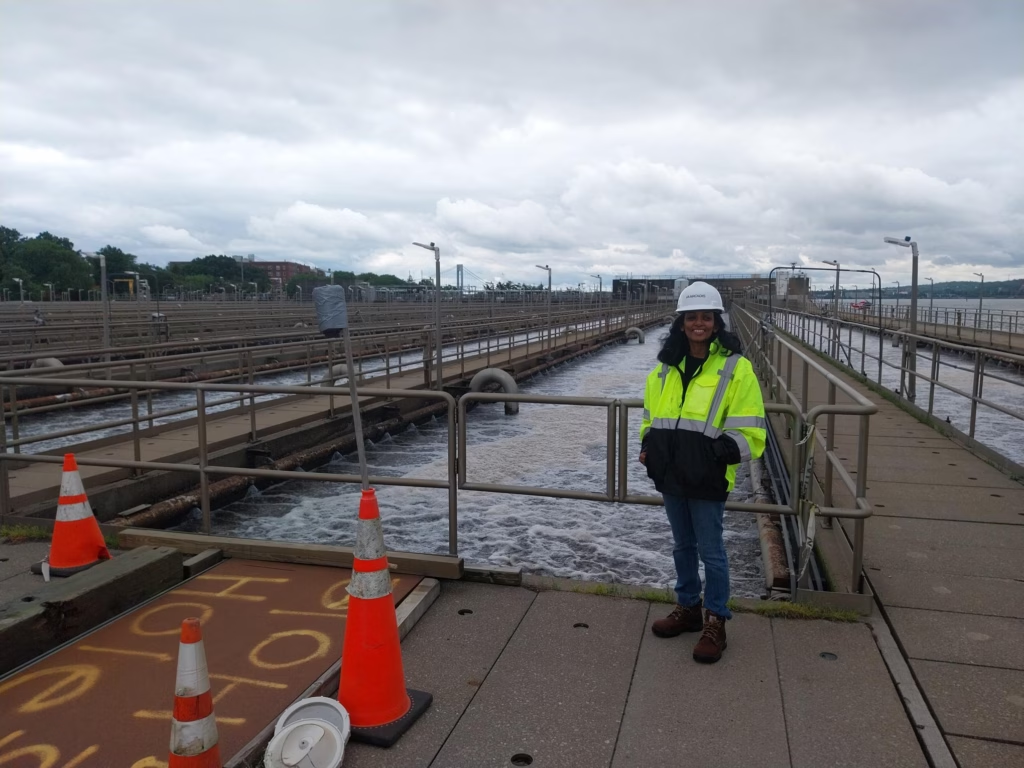
For Rosa Jose, in Mumbai, India, a moment during a high-stakes project review among senior leaders still sticks with her. “In the middle of the debate, a senior colleague paused and said, calmly but firmly, ‘Let’s hear Rosa, she has lived this work,’ ” said Jose, discipline director at Arcadis Consulting India. “It wasn’t a grand gesture, but it changed everything. The room shifted. People listened. My inputs shaped the decisions that followed, but more importantly, I felt seen not as the only woman in the room, but as a professional whose experience carried weight.”
Another common sentiment among women’s experiences is the profound effect of organizational investment. Many described employers that supported professional growth through programs like tuition reimbursement to pursue advanced degrees and support for participation in fellowship and leadership programs, which require time and monetary commitments.
“Support like this is a big reason I’ve continued to build my career here,” said April Nabors, vice president of water operations at Central Alabama Water, who has earned her Ph.D. and participated in leadership program during her tenure at CAW. “When an organization invests in its people, it strengthens leadership, encourages innovation, and ultimately improves the service we provide to our communities.
“For me, the water industry is about stewardship — of our resources, our communities, and the next generation of leaders — and I’m grateful to work for an organization that shares that commitment to cultivating talent and never becoming complacent in the pursuit of excellence.”
Women also noted the sense of inclusion and visibility that comes from being trusted as a strategic contributor. Women in roles across the sector — engineering, operations, communications, and more — described feeling empowered when their expertise was recognized as vital, not supplementary. They voiced a desire for more intentional invitations into spaces that have historically excluded women. This kind of visibility not only strengthens confidence but also broadens the perspectives shaping water’s future, which benefits the sector.
“One thing that would help even more women stay would be to have other female leaders invite those women into spaces where they haven’t been before,” said Cynthia Lane, general manager at Platte Canyon Water and Sanitation District in Colorado. “This provides exposure to new stakeholder groups, technical topics, and ways of thinking. Expanding our professional contacts and networking with diverse perspectives is very important to feeling included and valued in the water sector.”
Underlying all these experiences is a shared sense of purpose. Many described the water sector as a place where mission-driven professionals rally around protecting public health and supporting communities. That sentiment brings many women to the sector; what keeps them, though, are the mentors who champion their strengths, employers who invest in development, and cultures that position women as strategic partners.
AWWA thanks all of the women who shared their experiences to inform this story.
Advertisement