Reclaiming water in the desert
February 19, 2026

AWWA Articles
Reclaiming water in the desert
In the southwestern corner of Utah — one of the fastest-growing and driest regions in the United States — water reuse is a necessity. The area receives an average of eight inches of precipitation a year and population growth shows no signs of slowing. Because of this, Washington County Water Conservancy District is building a regional reuse system that is changing the way the community uses water.
“Water is way too valuable to use just once,” said Karry Rathje, public affairs manager for the district, which provides water to 95% of the county’s population. The region has been treating wastewater for irrigation uses (in parks, cemeteries, golf courses and the like) for 20 years. In the next 20 years, district leaders aim to not only expand that capacity but also bolster drinking water supply.
“We live in a rapidly growing area and are tasked with providing water to that growing community,” said Trinity Stout, project manager for the district. Reclaiming water allows the district “to offset the demand on potable sources now and introduce potable reuse in the future.”
Water reuse is a key tenet of Water 2050, an initiative of the American Water Works Association that envisions a sustainable, innovative water future. Washington County is one of many regions in the United States and Canada working to reclaim water for use, energy generation and even biofuel. “We’ve helped the community understand that reuse is a common and safe practice,” Stout said. “We’re not the ones pioneering this effort; it’s proven and in use globally.”
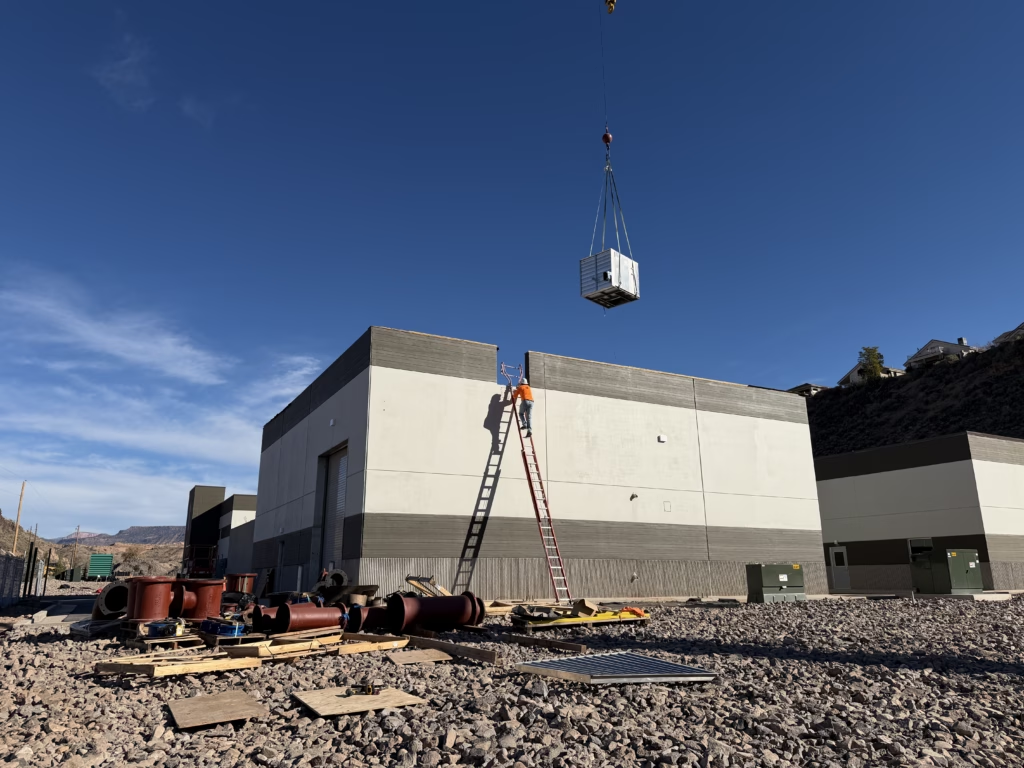
The expanded reuse system in Washington County will include three water reclamation facilities, one advanced water purification facility that will bring recycled water to drinking water standards, multiple pump stations, four new reservoirs for storing water, and about 60 miles of pipeline to deliver recycled water. In total, the expansion will allow the district to deliver 24,000 acre-feet of recycled water annually — almost 20,000 more than currently.
Educating leaders about water reuse has been a critical piece of the initiative. The district continues to share updates and information online and invite community members and leaders for facility tours. They have even taken city and state leaders out of state — to San Diego — to see water reuse in action. “They saw the technology, learned from industry experts and tasted the water,” Rathje said. “It’s one thing to talk about reuse; it’s another to see it being implemented and drink the water yourself.”
Funding for the project comes from federal and state grants and impact fees, with a clear message: New development pays for new infrastructure. Collaboration has also been key. “Partnerships with municipalities and wastewater agencies have been fundamental to the progress we’ve made in such a short time,” Stout said.

Advertisement