Preparing for an uncertain future
November 13, 2026

AWWA Articles
Preparing for an uncertain future
For water utilities, the future rarely arrives exactly as expected. Population growth accelerates, weather patterns shift, and infrastructure fails. That makes long-term planning more fraught — but also more necessary.
“There’s a quote that goes something like, ‘All models are wrong, but some are useful,’” said Darrin Geldert, planning manager at Loudoun Water in Virginia, one of the fastest-growing regions in the United States. “And that’s long-term forecasting. It is not going to generate a precise answer, but it is very useful for a lot of reasons: It helps guide your decisions and it gives you a basis for major investments.”
Long-term demand forecasting allows utility leaders to plan for the future and to hypothesize how they might address various scenarios, from changes in economic conditions and land use policies (like data centers) to climate and conservation. Forecasts also help utility leaders set rate structures that will cover cost of service and any debt financing on major capital projects.
“Forecasting is less about guessing what the future will look like and more about positioning the utility to face any number of variables the future might bring,” Geldert said. “It helps you be proactive, to make investments for the long term, so you’re not only being reactionary.”
Loudoun Water contends not only with incredible population growth, but also booming data center development — all while relying on one primary source for drinking water (the Potomac River). Because the District of Columbia, Maryland, and Virginia all engage in regional planning for public infrastructure that looks ahead for up to 30 years, Loudon Water engages in its own planning to align with that.
“This whole region relies on the Potomac,” Geldert said. “We make sure whatever we do makes sense with the region. We are not a standalone system.”
Loudoun Water’s planning has allowed the agency to keep up with potable water demand — which has increased 30% since 2015 — and build its resilience for the future, which is a key element of AWWA’s Water 2050 initiative.
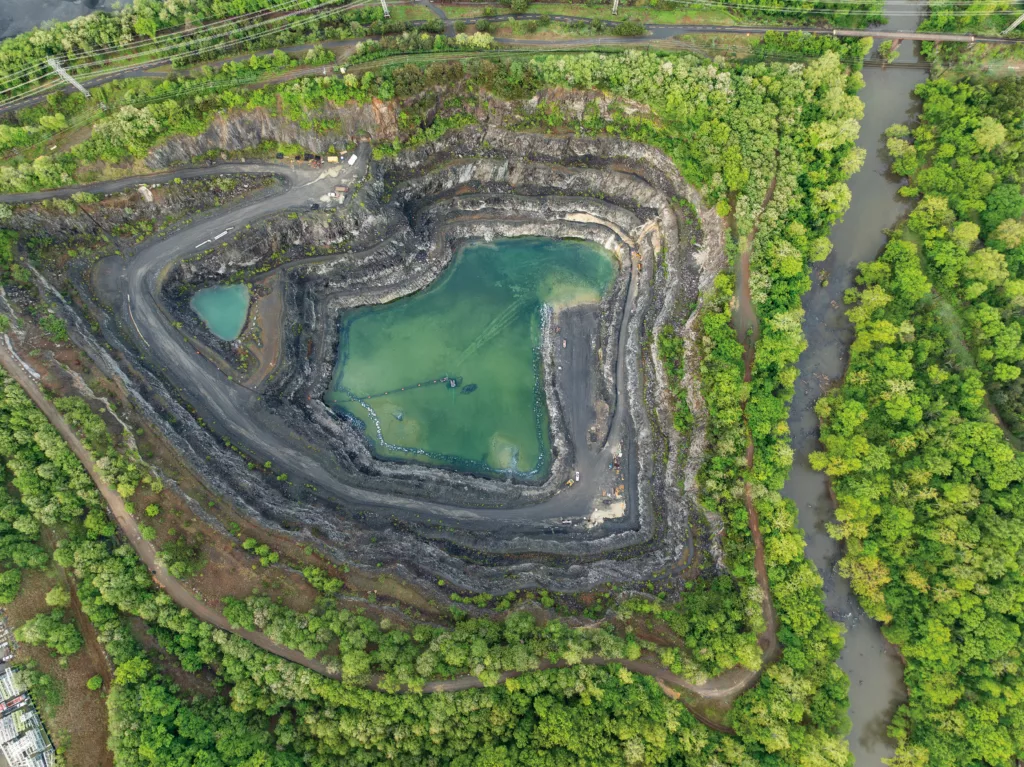
“Years before I started, Loudoun Water aimed to improve resilience and enhance water resources beyond the single source Potomac River,” Geldert said. The utility purchased a rock quarry years ago, and is now converting it to off-river storage, up to 1 billion gallons.
“We’re building a pump station now, and the reservoir should be filled up in a couple of years, providing us with quite a bit of resiliency in our system to maintain supply if our main source has some sort of problem,” he said, including impacts from drought, climate change, or contamination.
The quarry project illustrates the importance of long-term demand forecasting for identifying potential challenges and giving utilities adequate time to plan, design, permit, and construct before the need becomes acute. AWWA’s 2026 State of the Water of the Industry report shows that about half of survey respondents are “very” or “fully” prepared to meet long-term water demands; 15% say they are “not at all” or “slightly” prepared.
Geldert says the best thing to do is just start and be proactive.
“In long-term forecasting in general — this is demand forecasting or climate change forecasting — you have to start right away and know that there’s a huge uncertainty with any of those predictions,” he said. “Embrace that uncertainty and complexity, and know that you are making the best decision today.”
Advertisement