A living laboratory for water conservation
October 30, 2026

AWWA Articles
A living laboratory for water conservation
Corey Rushton has been chair of the Jordan Valley Water Conservancy District in Salt Lake County, Utah, for 10 years.
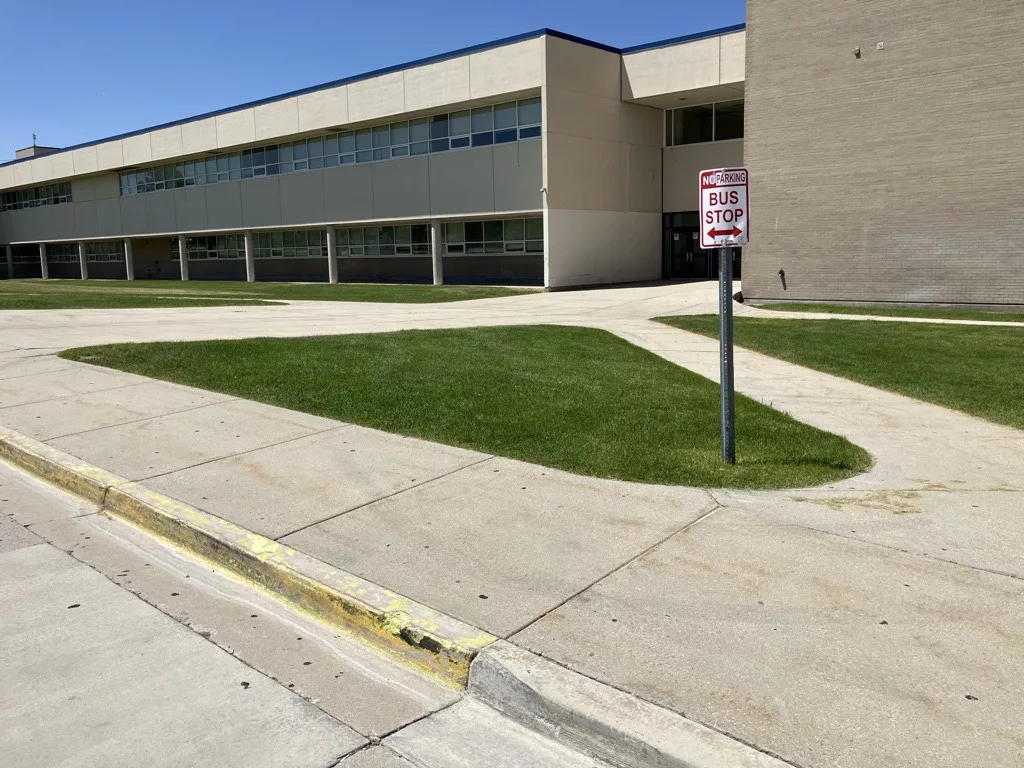
And for all of those years, he has driven by his neighborhood high school and wondered how an active campus could have so much non-functional turf.
“It’s either the best example or the worst example of non-functional turf in our service area,” he said, but acknowledged that for a long time, he didn’t quite know what to do about it.
Then, a new strategic plan brought things into focus — two things, to be precise.
“We have two core imperatives,” he said. “Increasing the public’s conscious connection to water — that’s the first — and the second: train the next generation of water leaders in our state.”
What better place to tackle both than a high school campus?
Recognizing an opportunity to collaborate with the school district’s new superintendent, Rushton proposed a two-pronged partnership: a course that teaches high-schoolers the importance of water conservation, and a campus-wide turf transformation project that allows students to put those principles into practice.
“It’s full circle,” Rushton said. “We teach students where their water comes from, how to be good water stewards, and they apply that to their campus — they actually conserve water — and the water they save the school district is donated.” Unused water shares from the district will benefit the ecologically-challenged Great Salt Lake, he added.
The high school course deployed last year, and students receive elective science credit for completion. The school district developed the curriculum, and Jordan Valley provided resources for water-wise landscaping instruction.
In the course, students visit Jordan Valley’s Conservation Garden Park for a firsthand look at conservation and water-wise practices. They also get the opportunity to redesign park strips into native landscapes.
“It’s a pretty good example of creating informed water citizens,” he said. “These students will be so much better equipped when they go to purchase their first home. When the home builder wants to throw down turf, they’ll be able to say, ‘No, let’s plant some of this.’ ”
Ideally, the students will also inform — and eventually take care of — the high school’s turf transformation project, which is currently in design. Jordan Valley secured funding from the Bureau of Reclamation and is also contributing conservation funds toward the $2 million-plus needed to replace turf — not only with native plants, but also with features for students, like bleachers and shade structures.
“The goal isn’t simply to remove non-functional turf,” Rushton said, “but to create an attractive, functional campus that serves as a living laboratory for students and a highly visible example for the surrounding community.”
It’s also a template. Rushton hopes to be able to use the success of this project as a model for more partnerships with other schools and districts.
“We work with city halls to help public facilities lead by example on conservation; schools are a natural next step,” he said.
Advertisement