Water resilience during wartime
October 2, 2026

AWWA Articles
Water resilience during wartime
After Russia invaded Ukraine in February 2022, Jim Good wondered what he could do to help. The longtime AWWA member has a deep career in water, and knowing Russia targeted Ukrainian infrastructure, he wanted to lend his expertise.
Through his connections in Washington, D.C., Good was introduced to Britta Ellwanger, Ukraine project director at forPeace, a non-governmental organization that provides relief in conflict-stricken regions. Among other projects, Ellwanger was working on restoring two water towers that had been destroyed, leaving area residents to manually haul water from a nearby river to their homes.
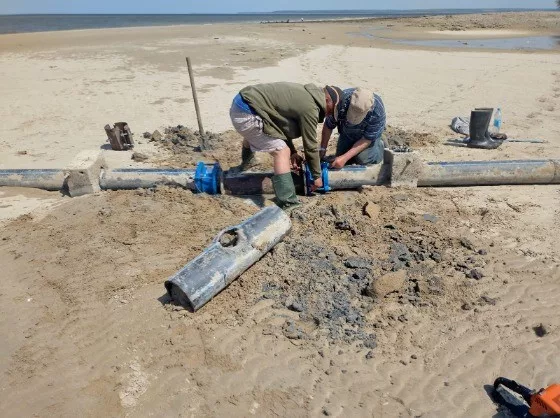
When Good learned of the need — and the cost, $50,000 — he reached out to his network and raised the money to rebuild those two towers.
“Getting those towers restored has been a godsend,” said Good, CEO and founder at Parkview Advisors. “It’s one of those things that we take for granted in our modern lives. Think about what you would do if your water utility was destroyed. You’d be spending a lot of your time hauling water.”
The projects caught the eye of local government officials, who have since pledged funding for half of an upcoming well project — $20,000 of the $40,000 — in support. (Good is helping with fundraising for this effort, too; he invites AWWA members to contact him if interested in supporting it.)
forPeace keeps costs low, in part, by focusing on augmenting what communities are already doing. Large relief organizations have significant resources, but they often come in with regimented proposals of the programs they want to fund, Ellwanger said.
She recalled talking to a community leader in her office, her desk stacked with proposals from relief organizations wanting to help with specific projects, like rebuilding a school — but not one had asked directly what they needed (in this case, a well).
“We’re the gap filler,” said Ellwanger, who was studying in Ukraine when the war began. “We follow the priorities of the local communities. Nothing is too big for local knowledge to solve.” (forPeace provided the well, which was $13,000 and served over 1,400 residents.)
In another instance, the Russian military destroyed a reservoir that served multiple regions. When Ellwanger arrived in the community, the locals were already at work; they knew of old wells that were paved over, and they learned that the Library of Congress had old photos showing the locations. Once residents pinpointed the wells, they uncovered them and found some that still had potable water. forPeace financially supported efforts to clean and restore the wells by creating mechanical hand-pump stations, and other relief organizations drilled larger wells across the county. The county, though, lacked electricity to run the larger wells; forPeace set up solar panels to do that.
“We empower local momentum because they are doing it best,” she said. “Things are always possible when ordinary people are involved.”
“They’re the heroes,” she added, referencing the presentation she gave at this year’s AWWA Annual Conference and Exposition (ACE26) in Washington, D.C., where the theme was “Water Heroes.”
Restoration efforts are just part of forPeace’s work. The organization also works to bridge connections across borders; Ellwanger recently brought a delegation of Ukrainian utility works to Utah, Wyoming, and Idaho. Despite language barriers, they swapped knowledge about valves and other intricacies of delivering reliable water service. The hope is that these connections endure beyond the one-time meeting, Good said.
It’s why he continues his involvement — all the way from Washington, D.C.
“The work we [water professionals] do is so vital, and it’s so easy to forget,” he said. “Without water and wastewater utilities, civilization as we know it can’t function.”
Advertisement