Keep Funds Flowing: WIFIA helps San Francisco prep infrastructure for the future
December 10, 2025

AWWA Articles
Keep Funds Flowing: WIFIA helps San Francisco prep infrastructure for the future
As communities across the United States face aging water infrastructure amid ever-tightening budgets, programs like the Water Infrastructure Finance and Innovation Act (WIFIA) become vital tools for ensuring resilient and sustainable water and wastewater systems. By offering low-cost, flexible financing, WIFIA empowers utilities like the San Francisco Public Utilities Commission (SFPUC) to modernize essential systems, safeguard public health, and prepare for seismic challenges.
The SFPUC was one of the earliest and largest beneficiaries of the WIFIA program in 2018, when it received a $699 million loan. It has since acquired two more loans to tackle critical infrastructure projects to help ensure San Francisco is prepared for the future.
For the SFPUC, which provides water to 2.7 million Bay Area residents and treats 40 billion gallons of wastewater annually, the WIFIA program has been especially useful for its flexibility, adaptability, and investment optimization, said Alexandra Gunnell, loans and grants director at SFPUC.
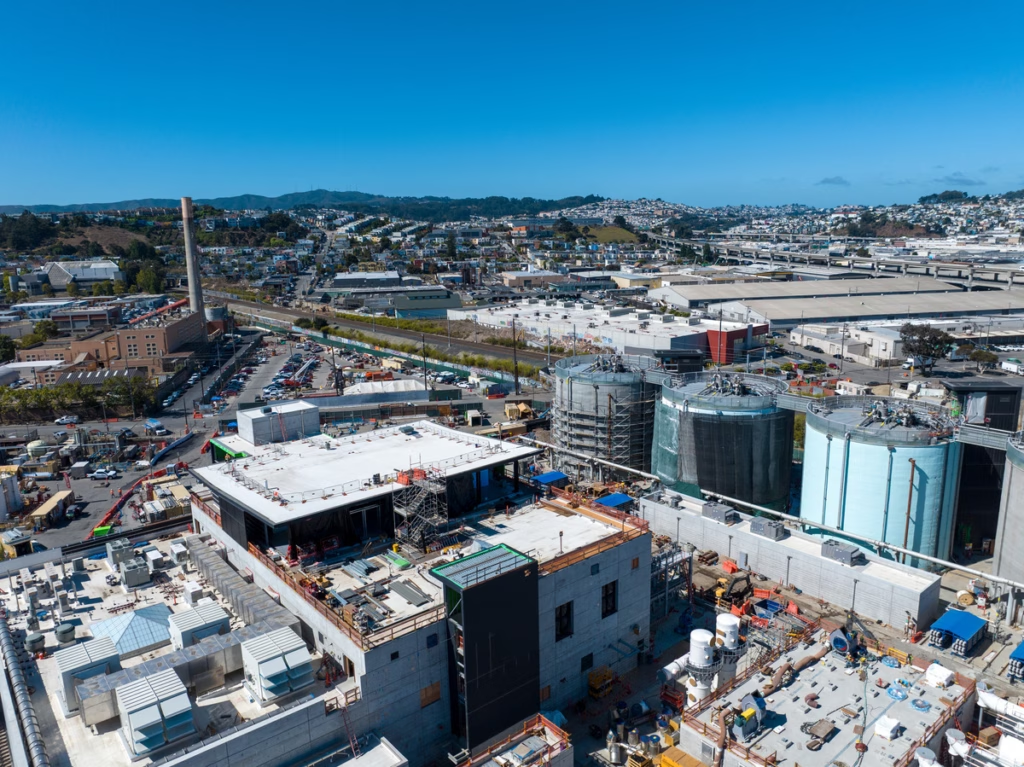
The first loan funded a new biosolids facility at San Francisco’s largest wastewater plant that upgrades Class B biosolids to Class A, enabling broader, more sustainable reuse applications like soil enrichment for farming. “Not to mention, other benefits to the community, such as reducing noise and odor, and providing streetscape improvements,” Gunnell said.
“In the city of San Francisco — 49 square miles — you can imagine that anywhere you have a treatment plant, you have a very constrained footprint, and our neighbors are businesses and homes — literally, right across the street. A lot of these upgrades are necessary in order to be a good neighbor and ensure long-term, safe operational reliability,” she added.
When interest rates dropped in 2020, the SFPUC was able to reduce its interest rate from 3.09% to 1.45%, projected to result in even greater savings over the life of the loan. This flexibility is a hallmark of WIFIA, offering utilities the opportunity to recalibrate financing as market conditions shift.
Also in 2020, the SFPUC received its second loan for a new headworks facility, built to withstand a 7.8 earthquake on the San Andreas fault. This allocation included an additional benefit: Since costs had increased on the first project, which was still in progress, WIFIA allowed the SFPUC to borrow 49% of the cost increase for the biosolids facility, too.
“A benefit [of WIFIA] is that they understand large and long projects often times do increase in cost beyond the initial estimate or even the initial bid,” Gunnell said.
SFPUC’s third and most recent WIFIA loan covers six wastewater projects, including a new water resource recovery facility that will supply 357 million gallons of recycled water for irrigation and toilet flushing. It will also save more than 60 million gallons of drinking water each year by reusing water onsite. Although still under construction, the facility is one of three nationwide to be recognized for its exceptional environmental benefits. Similar to the biosolids and headworks projects, the financing for this project and another stormwater project leveraged WIFIA loans alongside state revolving funds.
“Many states have financially impacted state revolving fund programs — they’re oversubscribed,” Gunnell said. “It’s a really nice benefit to be able to marry the two sources of funding because it optimizes the investment that is required to comply with federal funding requirements.”
Has your utility received a WIFIA loan for an infrastructure project? If AWWA can feature your project in its advocacy efforts, please fill out this form.
Overall, WIFIA’s low interest rates and flexible repayment schedules support their commitment to ratepayer affordability, and the SFPUC has water systems that are safe, reliable, and accommodate their growing population.
Advertisement