Rates & Finance

Rates & Finance
Implementation of sound principles regarding the design and application of water rates and charges for water service is a critical part of the water industry. Additionally, uniformity in water utility accounting policies and procedures is required for best business practices.
Resources
Water Reuse Cost Allocations and Pricing Survey
As reuse water is a relatively new source of supply, the water industry has not yet standardized on a single pricing approach. Furthermore, the measurement and allocation of costs of reuse water production is naturally complex, reflecting elements of both water and wastewater functions and requiring decisions regarding the correct treatment of shared costs. Through a survey and structured interviews, this report examines patterns in the cost allocation and pricing for reuse water service in the United States.
Water and Wastewater Rates Survey
Introducing the new digital platform for accessing data on water rates! Now, you can easily compare your rates to meet revenue goals or compare with others in the area, all with just a few clicks. The updated digital platform provides a user-friendly interface, making it simple to access data on water rates from anywhere at any time.
Technical Resources
Reports
Manuals
M1 Principles of Water Rates, Fees, and Charges
Your authoritative resource on water rates, fees, and charges.
Get the Manual
M29 Water Utility Capital Financing
Planning and obtaining financing for water utility capital projects. This edition addresses both traditional and innovative utility financing alternatives to meet both short-and long-term capital requirements.
Get the Manual
M47 Capital Project Delivery
This manual describes a variety of project delivery methods and provides guidance to utility managers, project engineers, and buyers for managing any size construction project.
Get the Manual
M54 Developing Rates for Small Systems
Best practices for setting rates, fees, and charges, especially for water utilities serving up to 10,000 population.
Get the Manual

Advertisement
Events With a Focus on Rates and Finance
See All Events

Related Resources
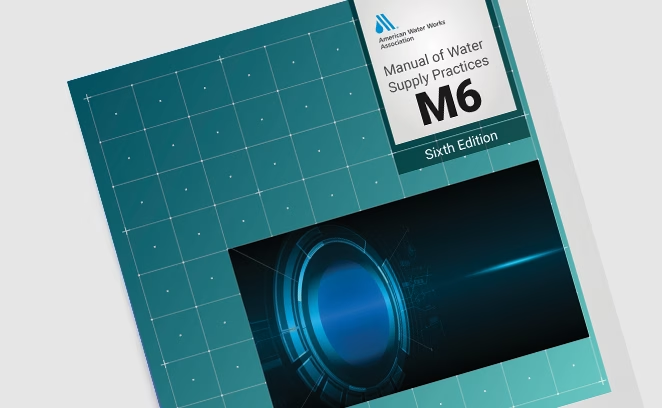
M6 Water Meters – Selection, Installation, Testing, and Maintenance, Sixth Edition
This manual is a guide to selecting, installing, testing, and maintaining water meters.
Get the Manual
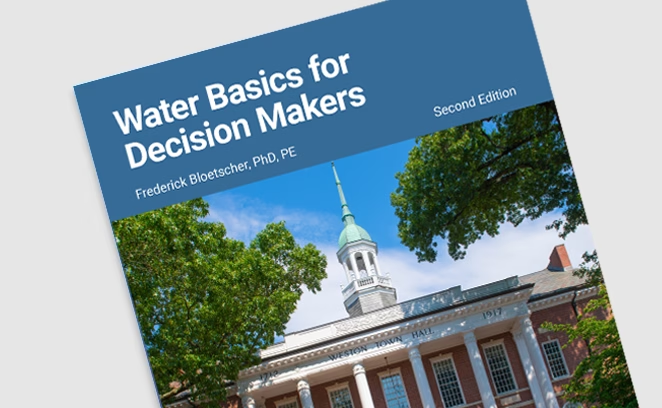
Water Basics for Decision Makers: Local Officials’ Guide to Water & Wastewater Systems, Second Edition
Water and wastewater utilities are the backbone of public health, economic development, and environmental protection. As expectations rise and challenges evolve—from regulatory shifts to infrastructure aging and workforce transitions—utility leaders must be equipped to navigate complexity with clarity and purpose. This revised edition of Water Basics for Decision Makers empowers public officials, managers, and operators with foundational knowledge and forward-looking insights to deliver safe, sustainable, and equitable service in a rapidly changing world.
Read More
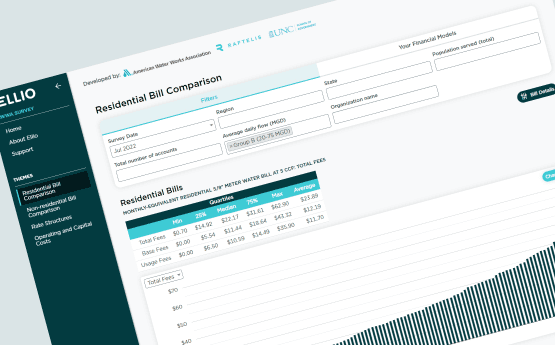
Water and Wastewater Rate Survey
Introducing the new digital platform for accessing data on water rates! Now, you can easily compare your rates to meet revenue goals or compare with others in the area, all with just a few clicks. The updated digital platform provides a user-friendly interface, making it simple to access data on water rates from anywhere at any time.
Learn More

M1 Principles of Water Rates, Fees, and Charges
As issues associated with water rates and charges continues to evolve, so must the utilities approach to selecting and communicating their rates, charges, and pricing policies.
Read More
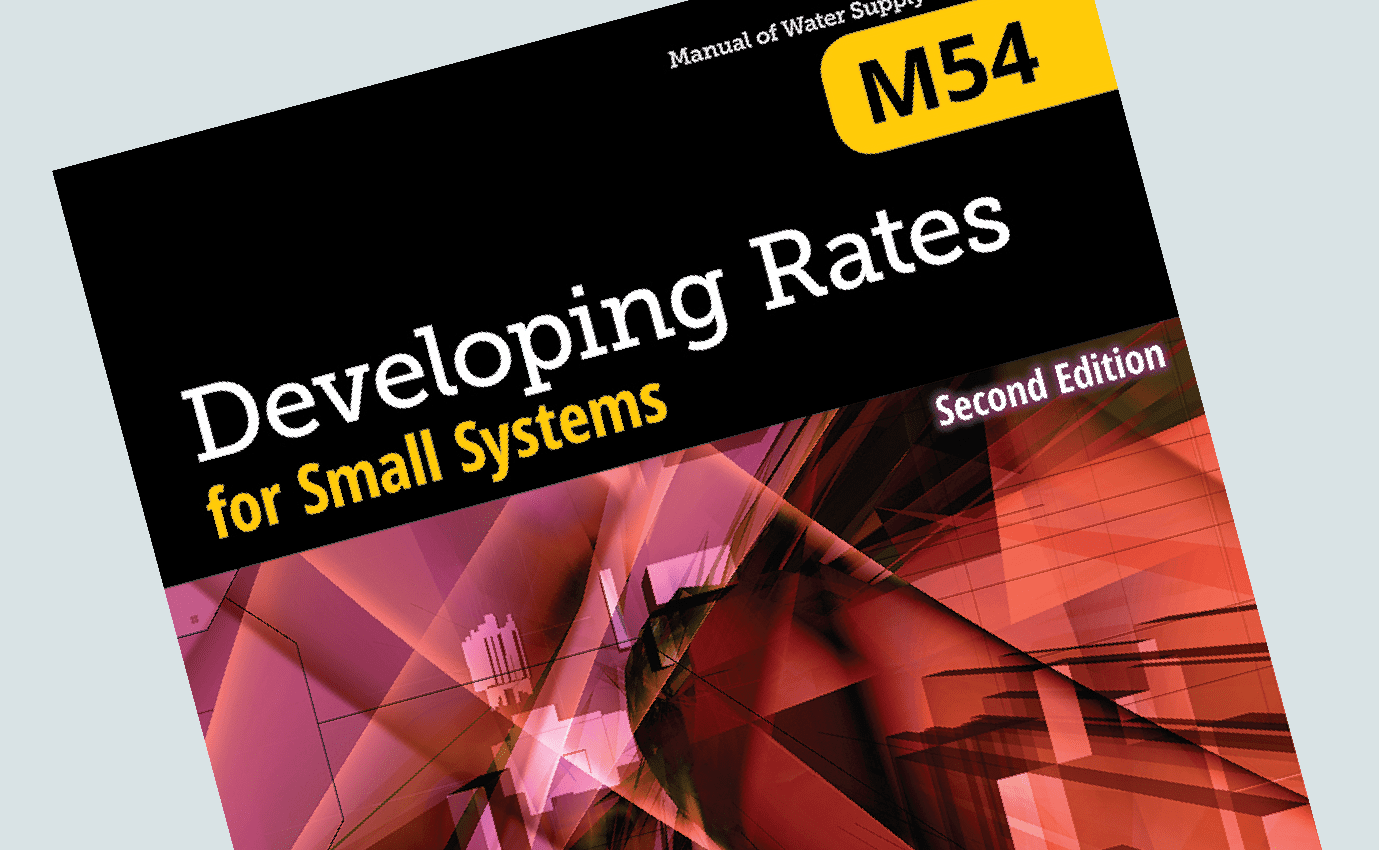
M54 Developing Rates for Small Systems
Limited data or resources don’t have to keep your small utility from developing a rate structure that recovers all your costs and is fair to your customers. This official manual of practice gives you the step-by-step guidance you need.
Read More

AWWA Policy Statements
AWWA’s policy statements are brief statements on protecting and improving water supply, water quality, management, and the interests of the public and the environment. They are written by consensus, subject to review and comment by AWWA committees, councils, and members. Because they represent AWWA’s position on these matters, they are approved by the AWWA Executive Committee of the board of directors.
Technical Committee Engagement
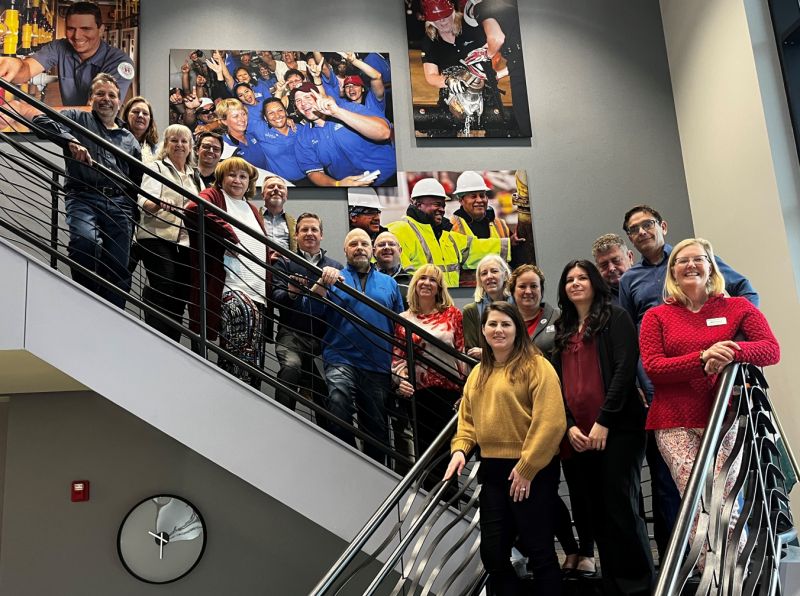
AWWA members are recognized globally for their industry expertise and their generosity in sharing that expertise for a better world through better water. AWWA members participate in committee activities, developing conference programs, writing technical manuals, developing standards, creating educational content and contributing to AWWA publications. Committee members primarily interact through conference calls, emails, and face to face meetings at conferences and events.
Finance, Accounting & Management Controls
Rates & Charges
Advertisement